
100 Common Urdu Words With English Meanings
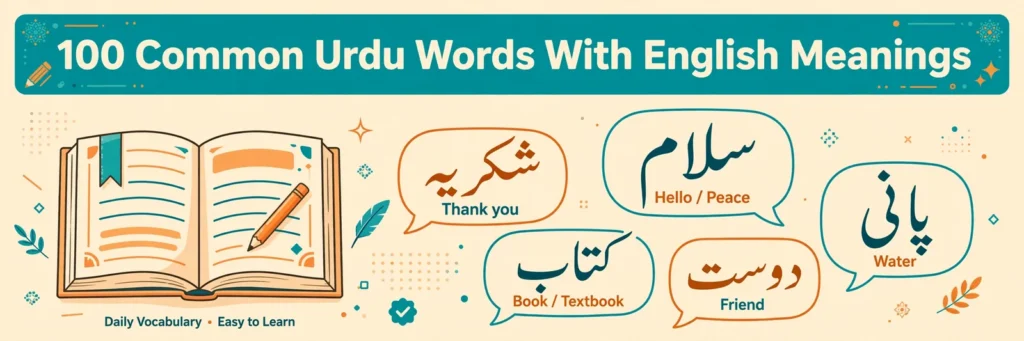
Learning 100 Common Urdu Words With English Meanings gives you a strong start in everyday conversation. You do not need hundreds of words before you can begin speaking. A small set of useful words can help you understand simple questions, replies, requests, and daily conversations.
This guide covers 100 common Urdu words with English meanings. Each word includes its Urdu script, Roman Urdu spelling, pronunciation, and a simple example sentence. The examples show how people use these words in real situations.
The list focuses on practical Urdu vocabulary for beginners. It includes common verbs, pronouns, family words, food, time, places, descriptions, and conversation words. These categories help you learn words by meaning instead of memorizing a random list.
You will also see words such as کیا (kya), کہاں (kahaan), آج (aaj), پانی (paani), گھر (ghar), کرنا (karna), and چاہیے (chahiye). These words appear often in everyday Urdu. Together, these 100 Common Urdu Words With English Meanings cover the words beginners meet most often.
100 Common Urdu Words With English Meanings can help English speakers read Urdu without knowing the Urdu script. However, Roman Urdu spelling has no single standard form. You may see different spellings for the same word.
Context also matters. Some Urdu words can have more than one English meaning. کل (kal), for example, can mean “yesterday” or “tomorrow.” The surrounding sentence tells you which meaning applies.
This approach follows Google’s people-first guidance. Useful content should answer the reader’s needs, provide original value, and show accurate information. This collection of 100 Common Urdu Words With English Meanings focuses on practical, everyday vocabulary you can use right away.
100 Common Urdu Words With English Meanings Daily Conversation
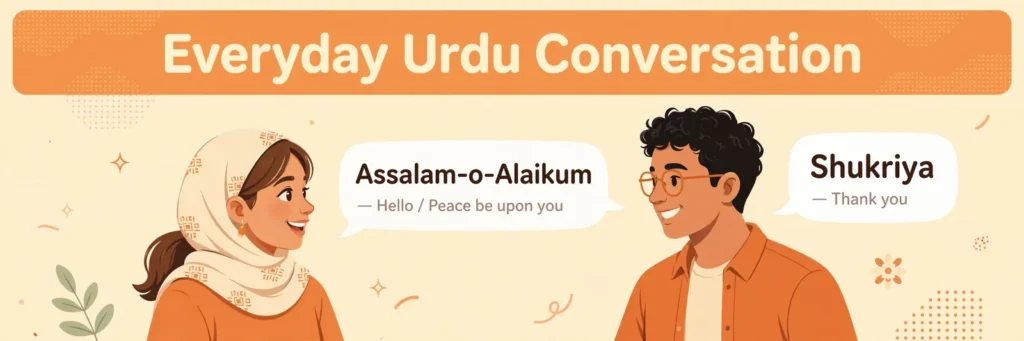
Learning a few 100 Common Urdu Words With English Meanings words can make everyday conversations much easier.
Focus on words that people actually use in daily speech.
Greetings and Basic Words
These Urdu words help you start and end simple conversations.
| Urdu | Meaning | Natural spoken example |
| السلام علیکم | Hello / Peace be upon you | السلام علیکم، آپ کیسے ہیں؟ |
| وعلیکم السلام | Hello in return | وعلیکم السلام، میں ٹھیک ہوں۔ |
| ہاں | Yes | ہاں، میں ابھی آتا ہوں۔ |
| نہیں | No / Not | نہیں، مجھے نہیں چاہیے۔ |
| اچھا | Okay / Alright | اچھا، پھر کل ملتے ہیں۔ |
| ٹھیک ہے | Okay / Alright | ٹھیک ہے، میں کر دوں گا۔ |
| بس | Enough / That’s all | بس، مجھے اتنا ہی چاہیے۔ |
| چلو | Let’s go / Okay then | چلو، اب چلتے ہیں۔ |
Thanking Someone
Urdu speakers commonly use شکریہ to thank someone.
In casual speech, people also use مہربانی when asking for help or showing appreciation.
- شکریہ۔ — Thank you.
- بہت شکریہ۔ — Thank you very much.
- مہربانی۔ — Thanks / Please.
- آپ کی بہت مہربانی۔ — I really appreciate it.
For example, if someone gives you directions, you can say:
شکریہ، آپ نے میری بہت مدد کی۔
“Thank you, you really helped me.”
Polite Requests
Use براہِ کرم for a formal or polite request.
In everyday conversation, speakers often use ذرا or پلیز instead.
- ذرا یہاں آئیں۔ — Please come here for a moment.
- ذرا میری مدد کریں۔ — Please help me.
- یہ ذرا مجھے دیں۔ — Please give me this.
- پلیز، دروازہ بند کر دیں۔ — Please close the door.
- مجھے پانی دے دیں۔ — Please give me some water.
The word ذرا often makes a request sound softer and more natural.
Common Questions
These question words appear in many everyday conversations.
| Urdu | Meaning | Natural spoken example |
| کیا | What / Is? | آپ کیا کر رہے ہیں؟ |
| کون | Who | وہ کون ہے؟ |
| کہاں | Where | آپ کہاں جا رہے ہیں؟ |
| کب | When | آپ کب آئیں گے؟ |
| کیوں | Why | آپ کیوں جا رہے ہیں؟ |
| کیسے | How | آپ کیسے ہیں؟ |
| کتنا | How much | یہ کتنے کا ہے؟ |
| کس | Which / Whose | آپ کس کے ساتھ ہیں؟ |
You can combine these words with familiar phrases to form useful questions. The 100 Common Urdu Words With English Meanings in this guide include the question words you will use most.
آپ کہاں جا رہے ہیں؟
Where are you going?
یہ کتنے کا ہے؟
How much does this cost?
آپ کب آئیں گے؟
When will you come?
Useful Responses
You do not need long sentences to keep a conversation going.
These short responses sound natural in everyday Urdu.
- جی۔ — Yes / Yes, please.
- جی ہاں۔ — Yes.
- جی نہیں۔ — No.
- بالکل۔ — Absolutely.
- ضرور۔ — Certainly / Sure.
- شاید۔ — Maybe.
- پتہ نہیں۔ — I don’t know.
- مجھے نہیں معلوم۔ — I don’t know.
- کوئی بات نہیں۔ — No problem.
- ٹھیک ہے۔ — Okay.
- اچھا، ٹھیک ہے۔ — Okay, that’s fine.
- مجھے سمجھ نہیں آئی۔ — I didn’t understand.
The word جی adds politeness to many responses. For example, ہاں sounds casual, while جی ہاں sounds more respectful. Words like these earn their place among the 100 Common Urdu Words With English Meanings every learner should know.
Words for Everyday Conversation
Some short Urdu words appear constantly in casual speech. Many of the 100 Common Urdu Words With English Meanings fall into this everyday group.
اب means “now” and often refers to the present moment.
اب کیا کریں؟
What should we do now?
پھر means “then” or “again,” depending on context.
پھر کب ملیں گے؟
When will we meet again?
ابھی means “right now” or “just now.”
میں ابھی آتا ہوں۔
I’ll be there in a moment.
پھر سے means “again.”
پھر سے بتائیں۔
Please tell me again.
بس can mean “enough,” “just,” or “that’s all.”
بس، اتنا کافی ہے۔
That’s enough; this much is fine.
ضرور expresses agreement or willingness.
ضرور، میں آپ کے ساتھ چلوں گا۔
Sure, I’ll go with you.
A Simple Daily Conversation
Here is how these words can sound in a real conversation:
A: السلام علیکم، آپ کیسے ہیں؟
B: وعلیکم السلام، میں ٹھیک ہوں۔ آپ سنائیں؟
A: میں بھی ٹھیک ہوں۔ آپ کہاں جا رہے ہیں؟
B: میں بازار جا رہا ہوں۔ آپ بھی چلیں گے؟
A: ہاں، ضرور۔ بس دو منٹ رکیں۔
B: ٹھیک ہے۔
Urdu Words by Category for Everyday Use
This short exchange uses common words without sounding like a textbook dialogue.
That makes these phrases easier to remember and use in real conversations.
Learning 100 Common Urdu Words With English Meanings words by category makes vocabulary easier to understand, remember, and use. Instead of memorizing random words, you can learn terms that belong to the same topic. This method also helps you connect new words with situations from daily life.
For example, family vocabulary helps you talk about parents, siblings, children, and relatives. Food words help you order meals, discuss ingredients, and shop for groceries. Home vocabulary lets you describe rooms, furniture, and everyday activities. Time and number words help you discuss schedules, prices, ages, and quantities.
Other categories cover common situations outside the home. Travel words can help you ask for directions, discuss transport, and find places. Shopping vocabulary helps you talk about prices, products, sizes, and payments. Body and health terms let you describe basic symptoms and communicate with a doctor.
Common Urdu verbs deserve special attention because they help you form complete sentences. Words for feelings and descriptions add more detail to your conversations.
The lists below focus on practical Urdu words that people use in real conversations. Each category includes simple examples to show how the words work in context. This makes the vocabulary easier to learn and apply when speaking Urdu.
Roman Urdu Pronunciation Guide
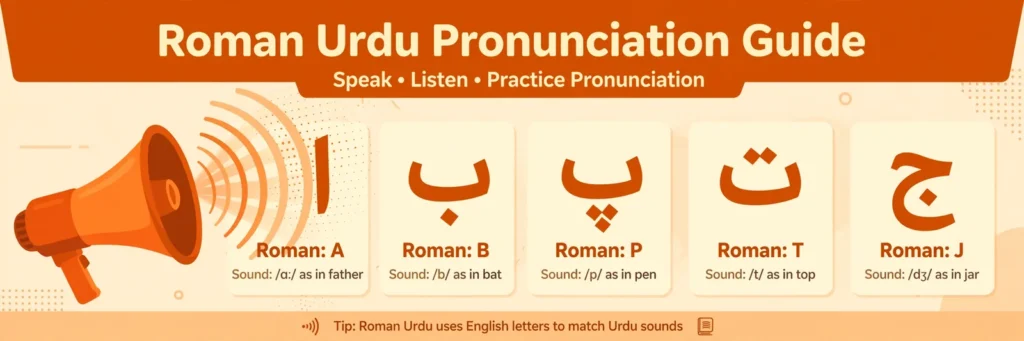
100 Common Urdu Words With English Meanings normally uses the Perso-Arabic script, which can look unfamiliar to new learners. Roman Urdu offers an easier starting point. It writes Urdu words with the Latin alphabet used in English.
For example:
آپ کیسے ہیں؟
Aap kaise hain?
How are you?
The Urdu script shows the original written form. Roman Urdu shows how learners can type or read the same words with familiar letters. English pronunciation gives an extra guide for learners who are still learning Urdu sounds.
| Urdu Script | Roman Urdu | English Pronunciation | Meaning |
| آپ | aap | aap | You |
| کیسے | kaise | kai-se | How |
| ہیں | hain | hain | Are |
| کیا | kya | kya | What |
| پانی | paani | paa-nee | Water |
| شکریہ | shukriya | shook-ree-ya | Thank you |
| اچھا | achha | uch-chha | Good / Okay |
| کہاں | kahan | ka-haan | Where |
Roman Urdu Is Not a Separate Language
Roman Urdu does not represent a different language. It represents Urdu in the Latin alphabet. People often use it in text messages, social media, online chats, and informal writing.
Roman Urdu has no single official spelling system. Different writers may spell the same Urdu word differently. The meaning usually stays the same.
For example, کیا may appear as kya, kia, or sometimes kiya. These spellings represent the same Urdu word.
Likewise, ہے can appear as hai, while ہیں may appear as hain, hen, or hein.
The spelling can change because Roman Urdu follows sound more than a fixed writing standard. Context helps readers understand the intended word.
Urdu Script, Roman Urdu, and Pronunciation
These three forms serve different purposes.
- Urdu script: The standard written form of Urdu.
- Roman Urdu: A Latin-letter representation used mainly for convenience.
- English pronunciation: A learner-friendly guide to Urdu sounds.
Roman Urdu should not replace Urdu script when you want to read or write standard Urdu. It works best as a bridge for beginners.
Common Roman Urdu Spelling Variations
You will often see different spellings for the same Urdu word online.
| Urdu | Common Roman Urdu Forms |
| کیا | kya / kia / kiya |
| کیوں | kyun / kyon / kyun |
| نہیں | nahi / nahin |
| ہیں | hain / hein / hen |
| ہے | hai / hey |
| میں | main / mein |
| بہت | bohat / bahut |
| شکریہ | shukriya / shukria |
| اچھا | achha / acha |
| چاہیے | chahiye / chaahiye |
Do not assume every spelling difference changes the word. Many differences come from personal typing habits.
How to Improve Urdu Pronunciation
Start with 100 Common Urdu Words With English Meanings and listen to native speakers. Then repeat the words aloud. Pay attention to sounds that English does not use in the same way.
Urdu includes sounds such as خ, غ, ق, and ڑ. These sounds may take practice for English speakers. Roman Urdu can help you read a word, but it cannot always show its exact sound.
For example, خ often appears as kh in Roman Urdu. The spelling gives you a useful clue, but listening provides a better pronunciation model.
When possible, use audio alongside the written forms. Hearing native pronunciation helps you notice stress, rhythm, vowel length, and unfamiliar consonants.
A good learning pattern is simple:
Urdu script → Roman Urdu → listen → repeat → use in a sentence
This approach helps beginners move from recognizing Urdu words to speaking them naturally.
Common Urdu Words With Example Sentences
Learning 100 Common Urdu Words With English Meanings words becomes easier when you see them in natural sentences. For example, آپ means “you” and is written as Aap in Roman Urdu. You can use it in آپ کیسے ہیں؟, which means “How are you?” A common phrase is آپ کا نام کیا ہے؟, meaning “What is your name?”
اچھا means “good” or “okay” and is written as Achha. You might say اچھا، پھر ملتے ہیں۔, meaning “Okay, see you later.” A common phrase is اچھا ہے, which means “That is good.” شکریہ means “thank you” and is written as Shukriya. For example, آپ کی مدد کا شکریہ۔ means “Thank you for your help.” A common phrase is بہت شکریہ, meaning “Thank you very much.”
پانی means “water” and is written as Paani. In daily conversation, you can say مجھے پانی چاہیے۔, meaning “I need water.” A common phrase is ایک گلاس پانی, meaning “a glass of water.” کھانا means “food” or “to eat” and is written as Khaana. The sentence کھانا تیار ہے۔ means “The food is ready.” A common phrase is کھانا کھانا, meaning “to eat food.”
گھر means “home” or “house” and is written as Ghar. You can say میں گھر جا رہا ہوں۔, meaning “I am going home.” A common phrase is گھر پر, meaning “at home.” دوست means “friend” and is written as Dost. For example, وہ میرا اچھا دوست ہے۔ means “He is my good friend.” A common phrase is میرے دوست, meaning “my friend.”
For questions, کیا means “what” and is written as Kya. آپ کیا کر رہے ہیں؟ means “What are you doing?” A 100 Common Urdu Words With English Meanings phrase is یہ کیا ہے؟, meaning “What is this?” کہاں means “where” and is written as Kahaan. You can ask آپ کہاں رہتے ہیں؟, meaning “Where do you live?” A common phrase is کہاں جا رہے ہیں؟, meaning “Where are you going?” Similarly, کیوں means “why” and is written as Kyun. The sentence آپ کیوں ہنس رہے ہیں؟ means “Why are you laughing?” A common phrase is کیوں نہیں؟, meaning “Why not?”
کیسے means “how” and is written as Kaise. The common sentence آپ کیسے ہیں؟ means “How are you?” A common phrase is کیسے ہو؟, meaning “How are you?” کون means “who” and is written as Kaun. You can say دروازے پر کون ہے؟, meaning “Who is at the door?” A common phrase is یہ کون ہے؟, meaning “Who is this?”
100 Common Urdu Words With English Meanings verbs are also important for building sentences. جانا means “to go” and is written as Jaana. For example, مجھے بازار جانا ہے۔ means “I have to go to the market.” A common phrase is گھر جانا, meaning “to go home.” آنا means “to come” and is written as Aana. The sentence وہ شام کو آئے گا۔ means “He will come in the evening.” A common phrase is یہاں آؤ, meaning “Come here.”
کرنا means “to do” and is written as Karna. You can say مجھے یہ کام کرنا ہے۔, meaning “I have to do this work.” A common phrase is کیا کرنا ہے؟, meaning “What needs to be done?” لینا means “to take” and is written as Lena. The sentence مجھے ایک ٹکٹ لینا ہے۔ means “I need to buy a ticket.” A common phrase is یہ لے لیں, meaning “Take this.” دینا means “to give” and is written as Dena. For example, مجھے پانی دے دیں۔ means “Please give me some water.” A common phrase is مجھے دے دیں, meaning “Please give it to me.”
چاہیے means “need,” “want,” or “should,” depending on context. It is written as Chahiye in Roman Urdu. You can say مجھے ایک قلم چاہیے۔, meaning “I need a pen.” A common phrase is کیا چاہیے؟, meaning “What do you need?” ضرور means “certainly” or “definitely” and is written as Zaroor. The sentence میں ضرور آؤں گا۔ means “I will definitely come.” A common phrase is جی ضرور, meaning “Yes, certainly.”
Some Urdu words describe feelings and opinions. خوش means “happy” and is written as Khush. For example, وہ آج بہت خوش ہے۔ means “He is very happy today.” A common phrase is خوش رہیں, meaning “Stay happy.” تھکا ہوا means “tired” and is written as Thaka hua. The sentence میں آج بہت تھکا ہوا ہوں۔ means “I am very tired today.” A common phrase is بہت تھکا ہوا, meaning “very tired.”
آسان means “easy” and is written as Aasaan. You can say یہ کام آسان ہے۔, meaning “This task is easy.” A common phrase is بہت آسان, meaning “very easy.” In contrast, مشکل means “difficult” and is written as Mushkil. The sentence یہ سوال مشکل ہے۔ means “This question is difficult.” A common phrase is بہت مشکل, meaning “very difficult.”
Using 100 Common Urdu Words With English Meanings in complete sentences helps you understand how native speakers use them in real conversations. Instead of memorizing پانی = water alone, practice مجھے پانی چاہیے۔ Instead of learning جانا = to go by itself, practice مجھے گھر جانا ہے۔ This approach helps you remember vocabulary, understand sentence patterns, and speak Urdu with greater confidence
Formal, Informal and Everyday Urdu
100 Common Urdu Words With English Meanings changes depending on who you are speaking to and the situation. The same idea can sound respectful, friendly, or very casual. Understanding these differences helps you speak Urdu naturally and avoid sounding too formal or too direct.
One of the most important differences is between آپ، تم، and تو. All three can refer to “you,” but they show different levels of respect and familiarity. آپ (aap) is the safest and most polite form. Use it with strangers, older people, teachers, customers, colleagues, and people you have just met. For example, آپ کیسے ہیں؟ means “How are you?” تم (tum) sounds more casual. People often use it with close friends, siblings, younger people, or someone they know well. For example, تم کہاں جا رہے ہو؟ means “Where are you going?”
تو (tu) is very informal and can sound rude or disrespectful when used with the wrong person. Close friends may use it affectionately, but learners should avoid using it until they understand the relationship and context.
Politeness also appears in common expressions. کیا آپ بیٹھیں گے؟ sounds more respectful than a direct command such as بیٹھو, which means “sit” in a casual style. Similarly, ذرا بیٹھیں means “please sit for a moment” and sounds polite in everyday speech. براہِ کرم also means “please,” but it can sound more formal than the everyday ذرا or پلیز, depending on the situation.
Everyday Pakistani 100 Common Urdu Words With English Meanings often uses simple words and expressions that may sound different from formal or literary Urdu. In casual conversation, speakers commonly use words such as بس for “enough” or “that’s all,” اچھا for “okay” or “oh, I see,” چلو for “let’s go” or “okay then,” and ٹھیک ہے for “okay” or “alright.” These expressions appear frequently in real conversations, messages, and informal speech.
Formal 100 Common Urdu Words With English Meanings uses a broader range of vocabulary, especially in writing, speeches, education, news, official communication, and literature. A learner may encounter words such as ابتدا for “beginning,” اختتام for “conclusion or ending,” ضروریات for “requirements,” and معلومات for “information.” These words are useful, but beginners should first learn the everyday forms they will hear and use most often.
Some Urdu words can also change meaning according to context. کل (kal) can mean either “yesterday” or “tomorrow.” The surrounding sentence tells you which meaning is intended. اچھا (achha) can mean “good,” “okay,” “really?” or “I see,” depending on tone and context. بس (bas) can mean “enough,” “only,” “just,” or “that’s all.” چلو (chalo) can mean “let’s go,” but speakers also use it to mean “okay,” “come on,” or “fine then.” چاہیے (chahiye) can express a need, want, or recommendation, depending on the sentence.
Pronouns can also carry social meaning beyond grammar. آپ communicates respect, while تم suggests familiarity. تو can express strong closeness in some relationships, but it can also sound insulting. The safest choice for Urdu learners is آپ until the other person clearly uses a more casual form with them.
A useful rule is to start polite and become more casual only when the relationship allows it. In Pakistani Urdu, respect matters in many everyday interactions. Choosing the right form can make your Urdu sound more natural and culturally appropriate.
Quick Comparison
آپ (Aap): polite and respectful; use with strangers, elders, teachers, and formal situations.
تم (Tum): familiar and casual; use with close friends, siblings, and people you know well.
تو (Tu): very informal; usually limited to close relationships and specific contexts.
When learning Urdu, do not focus only on the Rekhta Urdu Dictionary. Pay attention to who says the word, who hears it, and what situation surrounds it. Context often determines whether an expression sounds polite, casual, friendly, or too direct.
Essential Urdu Grammar Hidden Inside These 100 Words
Learning 100 Common Urdu Words With English Meanings words becomes much easier when you understand a few basic grammar patterns. You do not need advanced grammar to start speaking. You only need the structures that appear in everyday sentences.
کا / کی / کے
کا، کی، and کے show possession or a relationship between things. They can mean “of” or “’s” in English. The form changes based on the noun that follows.
For example, علی کا گھر means “Ali’s house.” علی کی کتاب means “Ali’s book.” علی کے دوست means “Ali’s friends.”
A simple pattern helps:
- کا → masculine singular
- کی → feminine singular
- کے → masculine plural or certain respectful forms
The important point is that these forms agree with the thing owned, not the owner.
میں / سے / کو / نے
These short words appear often in everyday Urdu sentences.
میں (mein) can mean “in,” “at,” or “into,” depending on context. For example, میں گھر میں ہوں means “I am at home.”
سے (se) can mean “from,” “with,” or “by.” For example, میں لاہور سے آیا ہوں means “I came from Lahore.”
کو (ko) often marks the person or thing affected by an action. For example, مجھے پانی چاہیے means “I need water.” Here, مجھے combines میں with کو.
نے (ne) often appears with completed actions in Urdu. For example, علی نے کھانا کھایا means “Ali ate the food.” Beginners should notice this pattern without trying to memorize every grammatical rule at once.
ہے / ہیں / ہوں
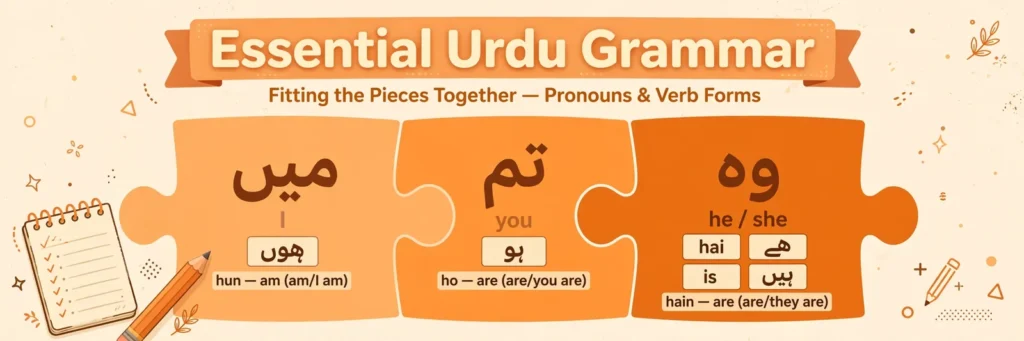
These forms come from the verb ہونا, meaning “to be.” They change according to the subject.
ہے (hai) usually works with a singular subject. یہ کتاب ہے means “This is a book.”
ہیں (hain) usually works with plural subjects or respectful آپ. یہ کتابیں ہیں means “These are books.” آپ کیسے ہیں؟ means “How are you?”
ہوں (hoon) goes with میں. میں ٹھیک ہوں means “I am fine.”
You will see these forms constantly in everyday Urdu. Learning them early helps you build complete sentences.
Urdu Pronouns
Pronouns replace names and nouns. Common Urdu pronouns include میں (main) for “I,” آپ (aap) for polite “you,” تم (tum) for casual “you,” وہ (woh) for “he,” “she,” or “that,” and یہ (yeh) for “this,” “he,” or “she,” depending on context.
100 Common Urdu Words With English Meanings does not always use separate pronouns for “he” and “she.” Context often tells you the intended meaning.
For example, وہ ڈاکٹر ہے can mean “He is a doctor” or “She is a doctor.” The surrounding conversation provides the meaning.
Common Urdu Verbs
Verbs describe actions or states. Many common Urdu verbs appear in their basic -نا form.
Examples include:
- جانا (jaana) — to go
- آنا (aana) — to come
- کرنا (karna) — to do
- کھانا (khaana) — to eat
- پینا (peena) — to drink
- دینا (dena) — to give
- لینا (lena) — to take
- دیکھنا (dekhna) — to see
- بولنا (bolna) — to speak
- سمجھنا (samajhna) — to understand
The verb changes when you build a sentence. For example, جانا becomes جاتا ہوں in میں گھر جاتا ہوں, meaning “I go home.”
You do not need to memorize every verb form immediately. Start by learning common verbs in useful sentences.
Masculine and Feminine Words
Urdu nouns have grammatical gender. Most nouns are either masculine or feminine.
Gender affects some adjectives, verbs, and possessive forms. For example, اچھا means “good” with a masculine noun, while اچھی usually works with a feminine noun.
Compare:
اچھا لڑکا — Good boy
اچھی لڑکی — Good girl
The same pattern appears with possession. میرا بھائی means “my brother,” while میری بہن means “my sister.”
Gender can feel unfamiliar to English speakers. Learning each new noun with a simple example helps you remember its correct form.
Singular and Plural
Urdu also changes words based on number. A singular noun refers to one person or thing. A plural noun refers to more than one.
For example:
کتاب — Book
کتابیں — Books
لڑکا — Boy
لڑکے — Boys
Plural forms can vary by word. Some nouns also change their endings when used in different sentence structures. Focus first on common patterns rather than memorizing every rule.
Number can also affect verbs and other words. For example, یہ کتاب ہے means “This is a book,” while یہ کتابیں ہیں means “These are books.”
How These Patterns Help You Use the 100 Words
The 100 Common Urdu Words With English Meanings words become much more useful when you combine them with these grammar patterns. Instead of learning گھر only as “house,” you can build میرا گھر — “my house.” Instead of memorizing دوست alone, you can say میرے دوست — “my friends” or “my friend,” depending on context.
You can also combine pronouns, verbs, and common vocabulary:
میں گھر جا رہا ہوں۔ — I am going home.
وہ میری بہن ہے۔ — She is my sister.
آپ کہاں سے ہیں؟ — Where are you from?
علی نے کھانا کھایا۔ — Ali ate the food.
These patterns give you enough grammar to start forming useful Urdu sentences. Learn the vocabulary first, then notice how Urdu changes around it. This makes grammar easier to understand and much easier to remember.
Frequently Asked Questions
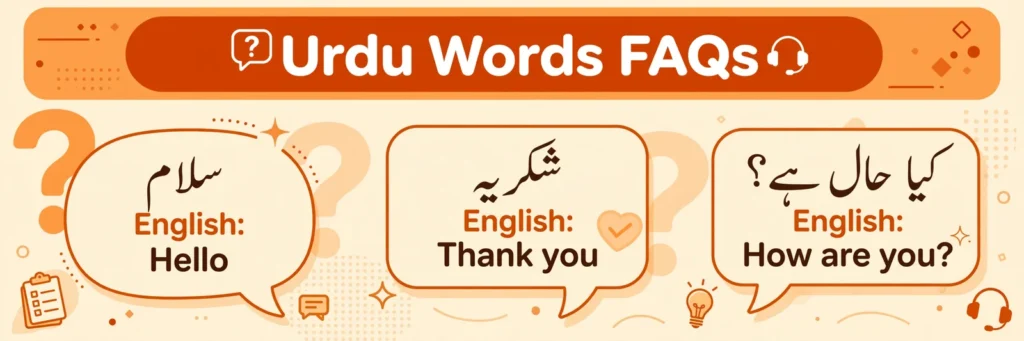
What are the most common Urdu words?
The most 100 Common Urdu Words With English Meanings words are everyday terms used in greetings, questions, family conversations, food, travel, and daily activities. Beginners can start with words such as آپ (aap), ہاں (haan), نہیں (nahin), اچھا (achha), ٹھیک (theek), شکریہ (shukriya), پانی (paani), گھر (ghar), کام (kaam), وقت (waqt), آج (aaj), ابھی (abhi), کیا (kya), کہاں (kahaan), and کیسے (kaise).
The best vocabulary depends on your goals. A traveler may need transport and shopping words first. A beginner learning conversation may need greetings, pronouns, questions, and common verbs.
What Urdu words should beginners learn first?
Beginners should learn words they can use in complete sentences. Start with basic pronouns, question words, greetings, common verbs, and everyday nouns.
Useful beginner words include آپ, میں, یہ, وہ, کیا, کہاں, کون, کیسے, جانا, آنا, کرنا, دینا, لینا, کھانا, پانی, گھر, and وقت.
Do not focus only on memorizing long vocabulary lists. Learn each word with a simple sentence. This helps you understand how Urdu grammar works in real communication. University Urdu programs also emphasize practical vocabulary, basic sentence structures, and everyday communication.
What is Roman Urdu?
Roman Urdu means writing Urdu with the Latin alphabet instead of the Urdu script. For example, آپ کیسے ہیں؟ can be written as Aap kaise hain?
Roman Urdu is not a separate language. It represents Urdu using Latin letters. People commonly use it in informal messages, online chats, and social media.
Roman Urdu spelling can vary because it does not follow one universally fixed spelling system. You may see forms such as kya, kia, or kiya for the same Urdu word.
Roman Urdu can help beginners connect Urdu script with pronunciation. However, learners should still study the Urdu script if they want strong reading and writing skills. Columbia University’s Urdu resources use transliteration alongside Urdu text to support learners.
How do you pronounce Urdu words?
The best way to pronounce Urdu words is to combine written guidance with audio. First, read the Urdu word. Then check its Roman Urdu form and listen to a native or reliable recording. Finally, repeat the word aloud.
Pay special attention to sounds that may not exist in English. These include خ, غ, ق, and ڑ. Roman spelling can also vary, so listening helps prevent pronunciation mistakes.
A useful practice cycle is:
Read → Listen → Repeat → Record yourself → Compare → Repeat again
University language programs also treat pronunciation, listening, speaking, reading, and writing as connected skills.
Is Pakistani Urdu different from formal Urdu?
Pakistani 100 Common Urdu Words With English Meanings and formal Urdu share the same core language. The main differences often appear in vocabulary, pronunciation, register, and everyday usage.
Spoken Pakistani Urdu may include English loanwords, local expressions, and casual phrases. Formal Urdu uses more literary or official vocabulary. Context also affects which expressions sound natural.
For example, everyday speech may favor short conversational expressions. Formal writing may use more elevated vocabulary.
This does not mean Pakistani Urdu and formal Urdu are completely separate varieties. Think of them as different registers and usage patterns within Urdu. Learners should first master common spoken Urdu. They can then add formal and literary vocabulary as their needs grow.
What is the difference between Urdu and Hindi?
100 Common Urdu Words With English Meanings and Hindi share a large grammatical foundation and much everyday vocabulary. In ordinary conversation, speakers can often understand much of each other’s speech. Columbia University describes Hindi and Urdu as sharing common grammar and emphasizes their common core vocabulary.
The clearest differences appear in their standard written forms and higher-level vocabulary. Urdu normally uses the Perso-Arabic Nastaliq script, while standard Hindi uses Devanagari. Formal Urdu draws heavily on Persian and Arabic vocabulary. Formal Hindi often uses more Sanskrit-derived vocabulary.
This distinction has historical and cultural dimensions as well. Academic scholarship describes modern Hindi and Urdu as closely related registers that developed different literary and political identities.
For beginners, the practical lesson is simple: learning Urdu gives you access to a language closely related to Hindi. The grammar and everyday speech overlap significantly, but the scripts and formal vocabulary differ.
Conclusion
Learning 100 Common Urdu Words With English Meanings starts with a small set of useful words. You do not need to memorize hundreds of terms before you start speaking. Focus on words you can use in real conversations.
Start with common greetings, questions, pronouns, verbs, and everyday nouns. Learn each word with its Urdu script, Roman Urdu form, meaning, and a simple sentence. This approach helps you remember vocabulary and understand how Urdu works in context.
Practice a little every day. Read the Urdu script, say the words aloud, listen to native speakers, and create your own sentences. Review older words regularly so they stay in your memory.
Roman Urdu can make the early stages easier, especially when you are still learning the Urdu script. However, keep building your reading skills as you progress.
Most importantly, use your new Urdu words instead of only studying them. Even a short conversation can build confidence and improve your skills.
With consistent practice, these 100 Common Urdu Words With English Meanings words can become the foundation for a much larger vocabulary. Start today, use the words often, and keep adding new Urdu expressions as you learn.