
Formal and Informal Urdu
Formal and Informal Urdu changes with every situation. You speak differently to a close friend than to a teacher or employer. These differences create two main language styles: Formal Urdu and Informal Urdu. Learning both helps you communicate with confidence and respect.
Formal Urdu uses polite words, respectful pronouns, and professional expressions. People use it in schools, offices, meetings, interviews, and official writing. Informal Urdu sounds relaxed and friendly. Families, friends, and classmates use it in daily conversations. Choosing the right style shows good manners and cultural awareness.
Understanding the Urdu language register improves speaking, writing, and listening skills. It also helps you avoid awkward situations. For example, using آپ (Aap) instead of تم (Tum) in professional settings reflects respect. This honorific system remains an important part of Urdu communication and South Asian culture. Linguists also recognize language register as a key feature of effective communication across many languages.
This guide suits beginners, travelers, students, professionals, translators, and English speakers who want to learn Urdu naturally. Every lesson includes clear explanations, practical examples, English meanings, and real-life conversations.
By the end, you will understand the difference between formal and informal Urdu, choose the correct expressions for every situation, and speak with greater confidence. You will also build stronger vocabulary, improve grammar, and communicate more naturally in everyday and professional settings.
What Is Formal and Informal Urdu?
Definition of Formal Urdu
Formal and Informal Urdu is the respectful style of the Urdu language. People use it in professional, academic, and official settings. It follows proper grammar, polite vocabulary, and respectful sentence structures. Formal Urdu often includes honorific pronouns like آپ (Aap) and courteous expressions that show respect. This style creates clear communication and leaves a positive impression. It also reflects the cultural values of courtesy and professionalism found across Pakistan and many Urdu-speaking communities.
Characteristics of Formal Urdu
Formal Urdu uses polite words and complete sentences. It avoids slang, casual abbreviations, and overly familiar expressions. Speakers choose respectful pronouns and honorific verb forms when addressing elders, teachers, employers, or strangers. The vocabulary often includes words with Persian and Arabic roots, especially in official communication. The tone remains calm, clear, and professional. Good pronunciation and proper etiquette also strengthen formal communication.
Where Formal Urdu Is Used
You will hear and read Formal Urdu in many professional and educational environments. Schools and universities use it during lectures, classroom discussions, examinations, and official notices. Government offices rely on it for applications, public announcements, and legal documents. Businesses use Formal Urdu in meetings, presentations, emails, and customer communication. Public speakers choose it to address large audiences with respect and clarity. Writers use it in official letters, reports, research papers, and academic writing. Learning Formal Urdu helps you communicate confidently in these situations and builds trust with native speakers.
Formal vs Informal Urdu
BothFormal and Informal Urdu follow the same grammar rules. However, they differ in vocabulary, tone, and usage. The right choice depends on the situation and the person you are addressing. Formal Urdu shows respect and professionalism. Informal Urdu creates a warm and friendly atmosphere. Knowing the difference helps you avoid misunderstandings and communicate naturally. The comparison below highlights the most important differences.
Quick Comparison Table
| Feature | Formal Urdu | Informal Urdu |
| Vocabulary | Polite, professional, and refined words | Simple, everyday, and casual words |
| Pronouns | Mostly uses آپ (Aap) for respect | Often uses تم (Tum) or تو (Tu) with close relationships |
| Tone | Respectful, courteous, and professional | Relaxed, friendly, and conversational |
| Grammar | Uses complete sentences and honorific verb forms | Allows shorter sentences and casual expressions |
| Sentence Structure | Well-organized and grammatically complete | Flexible and natural for daily speech |
| Greetings | Assalam-o-Alaikum, Adaab, Good Morning | Hi, Hello, Kya haal hai? |
| Requests | Uses polite phrases like “Please” and respectful wording | Uses direct and friendly requests |
| Apologies | Formal expressions such as “I sincerely apologize” | Simple phrases like “Sorry” or “Maaf karna” |
| Professional Communication | Meetings, interviews, emails, presentations, and official letters | Rarely used in professional settings except among close colleagues |
| Daily Conversation | Used with elders, teachers, customers, and strangers | Used with friends, family, classmates, and close relatives |
Choosing the correct style improves communication and shows cultural awareness. Use Formal Urdu when respect, professionalism, or authority matters. Choose Informal Urdu when speaking with people who know you well. Native speakers naturally switch between both styles based on the relationship and situation. Developing this skill will make your Urdu sound more fluent, confident, and culturally appropriate.
Why Urdu Has Formal and Informal Registers
Formal and Informal Urdu is more than a language. It also reflects culture, respect, and relationships. People choose different words based on whom they are speaking to and where the conversation takes place. This practice creates formal and informal language registers. Learning these registers helps you speak naturally and avoid uncomfortable situations.
Respect in South Asian Culture
Respect plays a central role in South Asian culture. People show courtesy through their words and actions. Urdu reflects this tradition by using polite greetings, respectful pronouns, and gentle expressions. Younger people usually speak more formally to elders, teachers, guests, and community leaders. This habit strengthens relationships and shows good manners.
Honorific System
The Urdu honorific system changes the way people address others. Speakers often use آپ (Aap) to show respect. They choose تم (Tum) for friends and people of similar age. تو (Tu) appears only in very close relationships or specific cultural settings. Verbs also change with these pronouns, making honorifics an important part of Urdu grammar.
Influence of Persian and Arabic
Urdu developed through centuries of cultural exchange. Persian shaped its literary style and formal vocabulary. Arabic added many religious, scholarly, and official terms. As a result, Formal Urdu often includes Persian and Arabic loanwords, while everyday conversations use simpler and more familiar expressions.
Social Context
Every conversation has a social setting. Speaking to a professor differs from chatting with a sibling. Native speakers adjust their vocabulary, tone, and sentence structure according to age, status, familiarity, and occasion. This flexibility makes communication respectful and effective.
Professional Communication
Formal Urdu creates trust in professional environments. Employers expect respectful language during interviews, meetings, presentations, and official correspondence. Schools, universities, courts, and government offices also prefer this style. Using the correct register shows confidence, professionalism, and cultural awareness. Linguists describe this practice as language register, a key concept in sociolinguistics that explains how language changes with context and audience.
Urdu Honorific Pronouns Explained
Honorific pronouns play a vital role in Formal and Informal Urdu. They help speakers show respect, closeness, or familiarity. Unlike English, Urdu uses different second-person pronouns based on the relationship between speakers. Choosing the correct pronoun improves communication and prevents misunderstandings.
تو (Tu)
Meaning: “You” (very informal)
Respect Level: Very low
Grammar Agreement: Uses singular informal verb forms.
Common Mistakes: Many beginners use تو (Tu) with strangers or elders. This sounds rude in most situations. Native speakers usually reserve it for very close friends, small children, or poetic and religious contexts.
English Comparison: English has only one word, “you.” It does not show this level of familiarity.
تم (Tum)
Meaning: “You” (informal but polite)
Respect Level: Medium
Grammar Agreement: Takes plural-style verb agreement in standard Urdu, even when addressing one person.
Common Mistakes: Learners often use تم (Tum) during interviews or while speaking to teachers. In professional situations, آپ (Aap) is the safer choice.
English Comparison: English uses “you” for friends and colleagues. Urdu distinguishes this level with تم (Tum).
آپ (Aap)
Meaning: “You” (formal and respectful)
Respect Level: High
Grammar Agreement: Always takes honorific plural verb forms, even for one person.
Common Mistakes: Some learners mix آپ (Aap) with singular verbs. This creates grammatical errors. The verb must always match the honorific form.
English Comparison: English does not have a separate respectful pronoun. Speakers express politeness through words like please, sir, or ma’am. Urdu builds respect directly into its pronouns and verb agreement.
Choosing the Right Pronoun
| Pronoun | Meaning | Respect Level | Typical Usage |
| تو (Tu) | You | Very Informal | Close friends, siblings, small children, poetry |
| تم (Tum) | You | Informal | Friends, classmates, cousins, familiar colleagues |
| آپ (Aap) | You | Formal | Elders, teachers, employers, customers, strangers, official communication |
Mastering these three pronouns is one of the most important steps in learning Urdu. Native speakers switch between them naturally according to age, relationship, and situation. Using the correct honorific pronoun shows cultural awareness, good manners, and confidence in both formal and informal conversations.
Formal Urdu Greetings
Greetings create the first impression in every conversation. Formal and Informal Urdu greetings show respect, kindness, and professionalism. People use them when meeting elders, teachers, employers, customers, or anyone they do not know well. Choosing the right greeting also reflects good Urdu etiquette and cultural awareness. If you are unsure which expression to use, select the more respectful option.
The table below explains common Formal Urdu greetings with their English meanings and the best situations to use them.
| Formal Urdu | Roman Urdu | English Meaning | Best Usage |
| السلام علیکم | Assalam-o-Alaikum | Peace be upon you | Universal greeting for formal and respectful conversations |
| آداب | Adaab | Respectful greetings | Cultural and literary settings, especially when meeting elders |
| صبح بخیر | Subah Bakhair | Good Morning | Schools, offices, meetings, and professional events |
| خوش آمدید | Khush Aamdeed | Welcome | Greeting guests, visitors, customers, and event participants |
| آپ سے مل کر خوشی ہوئی | Aap Se Mil Kar Khushi Hui | Nice to meet you | First meetings, interviews, conferences, and business introductions |
| شکریہ | Shukriya | Thank you | Expressing gratitude in formal and professional situations |
| براہ کرم | Bara-e-Karam | Please | Making polite requests in offices, classrooms, and public places |
| معاف کیجیے | Maaf Kijiye | Excuse me / Pardon me | Getting attention politely, apologizing, or interrupting respectfully |
These greetings work well in schools, universities, government offices, business meetings, official ceremonies, and public speaking events. Native Urdu speakers often combine them with آپ (Aap) to create a respectful tone. Learning these expressions will help you communicate with confidence and make a positive impression in both professional and formal social settings.
Informal Urdu Greetings
Formal and Informal Urdu greetings make daily conversations feel warm and natural. People use them with friends, siblings, classmates, cousins, and close colleagues. These expressions create a relaxed atmosphere and help build strong personal connections. Unlike Formal Urdu, casual greetings use simple words and a friendly tone. However, avoid them in interviews, official meetings, or when speaking to elders. In those situations, Formal Urdu remains the better choice.
The table below introduces common Formal and Informal Urdu greetings with their English meanings and the situations where native speakers use them.
| Informal Urdu | Roman Urdu | English Meaning | Best Usage |
| ہائے | Hi | Hi | Friends, classmates, and casual chats |
| ہیلو | Hello | Hello | Everyday conversations and phone calls |
| کیا حال ہے؟ | Kya Haal Hai? | How are you? | Greeting friends or relatives |
| کہاں ہو؟ | Kahan Ho? | Where are you? | Calling or texting someone you know well |
| چلیں؟ | Chalain? | Shall we go? / Let’s go? | Inviting someone to leave or start an activity |
| ٹھیک ہے | Theek Hai | Okay / All right | Agreeing with someone or ending a discussion |
| اللہ حافظ / بائے | Allah Hafiz / Bye | Goodbye / Bye | Ending casual conversations with friends and family |
Native Urdu speakers often combine these greetings with smiles, relaxed body language, and friendly expressions. You will hear them at home, in schools, during shopping, while traveling, and on social media. Learning these everyday phrases helps you understand real conversations and speak more naturally. Once you master both Formal and Informal Urdu greetings, you can switch between language styles with confidence and communicate comfortably in almost every situation.
Formal Urdu Vocabulary List
A strong Formal and Informal Urdu vocabulary helps you communicate with confidence in professional and official settings. These words appear in workplaces, schools, government offices, businesses, and customer interactions. Learning them improves both speaking and writing skills. The categories below include commonly used formal words with their Roman Urdu spelling and English meanings.
Workplace
| Urdu | Roman Urdu | English Meaning |
| دفتر | Daftar | Office |
| ملازم | Mulazim | Employee |
| افسر | Afsar | Officer |
| اجلاس | Ijlaas | Meeting |
| رپورٹ | Report | Report |
| ذمہ داری | Zimmedari | Responsibility |
Education
| Urdu | Roman Urdu | English Meaning |
| جامعہ | Jamiya | University |
| استاد | Ustaad | Teacher |
| طالب علم | Talib-e-Ilm | Student |
| امتحان | Imtehaan | Examination |
| تحقیق | Tehqeeq | Research |
| تعلیم | Taleem | Education |
Government
| Urdu | Roman Urdu | English Meaning |
| حکومت | Hukoomat | Government |
| درخواست | Darkhwast | Application |
| محکمہ | Mahkama | Department |
| قانون | Qanoon | Law |
| اجازت | Ijazat | Permission |
| سرکاری | Sarkari | Official |
Business
| Urdu | Roman Urdu | English Meaning |
| تجارت | Tijarat | Business |
| معاہدہ | Muahida | Agreement |
| کمپنی | Company | Company |
| سرمایہ کاری | Sarmaya Kari | Investment |
| منافع | Munafa | Profit |
| گاہک | Gahak | Customer |
Customer Service
| Urdu | Roman Urdu | English Meaning |
| خدمت | Khidmat | Service |
| شکریہ | Shukriya | Thank you |
| براہ کرم | Bara-e-Karam | Please |
| مدد | Madad | Help |
| شکایت | Shikayat | Complaint |
| حل | Hal | Solution |
Hospitality
| Urdu | Roman Urdu | English Meaning |
| خوش آمدید | Khush Aamdeed | Welcome |
| مہمان | Mehmaan | Guest |
| ضیافت | Ziyafat | Hospitality |
| تشریف رکھیے | Tashreef Rakhiye | Please have a seat |
| تشریف لائیے | Tashreef Laiye | Please come in |
| مہربانی | Meherbani | Kindness / Courtesy |
These Formal and Informal Urdu words appear regularly in professional communication, academic writing, official documents, and respectful conversations. Practice them in sentences instead of memorizing them alone. This method improves vocabulary retention and helps you speak Formal Urdu more naturally in real-life situations.

Informal Urdu Vocabulary List
Formal and Informal Urdu vocabulary helps you speak naturally in everyday life. Native speakers use these words during casual conversations with family, friends, neighbors, and classmates. You will also hear them while shopping, traveling, eating out, and chatting online. Learning these expressions makes your Urdu sound more fluent and comfortable. The categories below include common informal words with their Roman Urdu spelling and English meanings.
Family
| Urdu | Roman Urdu | English Meaning |
| امی | Ammi | Mom |
| ابو | Abu | Dad |
| بھائی | Bhai | Brother |
| بہن | Behen | Sister |
| گھر | Ghar | Home |
| چلو | Chalo | Let’s go |
Friends
| Urdu | Roman Urdu | English Meaning |
| دوست | Dost | Friend |
| یار | Yaar | Buddy / Pal |
| مزہ آیا | Maza Aya | It was fun |
| واقعی؟ | Waqai? | Really? |
| ٹھیک ہے | Theek Hai | Okay |
| ملتے ہیں | Milte Hain | See you later |
Travel
| Urdu | Roman Urdu | English Meaning |
| کہاں؟ | Kahan? | Where? |
| چلیں | Chalain | Let’s go |
| رکیں | Rukain | Stop |
| جلدی | Jaldi | Quickly |
| راستہ | Rasta | Road / Way |
| پہنچ گئے | Pohanch Gaye | We arrived |
Shopping
| Urdu | Roman Urdu | English Meaning |
| کتنے کا؟ | Kitnay Ka? | How much is it? |
| مہنگا | Mehnga | Expensive |
| سستا | Sasta | Cheap |
| خریدنا | Kharidna | To buy |
| پیسے | Paisay | Money |
| ٹھیک ہے | Theek Hai | Deal / Okay |
Food
| Urdu | Roman Urdu | English Meaning |
| کھانا | Khana | Food / Meal |
| پانی | Pani | Water |
| چائے | Chai | Tea |
| بھوک | Bhook | Hunger |
| مزید | Mazeed | More |
| بہت مزیدار | Bohat Mazedar | Very delicious |
Daily Routine
| Urdu | Roman Urdu | English Meaning |
| اٹھو | Utho | Wake up |
| سو جاؤ | So Jao | Go to sleep |
| آؤ | Aao | Come here |
| جاؤ | Jao | Go |
| انتظار کرو | Intizar Karo | Wait |
| ابھی | Abhi | Right now |
Entertainment
| Urdu | Roman Urdu | English Meaning |
| فلم | Film | Movie |
| گانا | Gana | Song |
| کھیل | Khail | Game |
| ٹی وی | TV | Television |
| مزہ | Maza | Fun |
| واہ | Wah | Wow |
These everyday words appear in homes, markets, restaurants, schools, and social gatherings. Practice them during real conversations instead of learning them in isolation. Native speakers use these expressions every day, making them essential for building confidence in Informal Urdu and improving natural communication.
Formal Urdu Sentences with English Meanings
Learning complete sentences helps you speak Formal Urdu with confidence. These examples reflect real conversations in professional, academic, and official settings. They use respectful language, proper grammar, and polite expressions. Practice them regularly to improve your speaking skills and communicate naturally.
Greetings
| Urdu | Roman Urdu | English Meaning |
| السلام علیکم | Assalam-o-Alaikum | Peace be upon you. |
| آپ سے مل کر خوشی ہوئی۔ | Aap Se Mil Kar Khushi Hui. | Nice to meet you. |
Requests
| Urdu | Roman Urdu | English Meaning |
| براہ کرم میری مدد کیجیے۔ | Bara-e-Karam Meri Madad Kijiye. | Please help me. |
| کیا آپ دوبارہ سمجھا سکتے ہیں؟ | Kya Aap Dobara Samjha Saktay Hain? | Could you explain it again? |
Permission
| Urdu | Roman Urdu | English Meaning |
| کیا میں اندر آ سکتا ہوں؟ | Kya Main Andar Aa Sakta Hoon? | May I come in? |
| کیا مجھے اجازت مل سکتی ہے؟ | Kya Mujhe Ijazat Mil Sakti Hai? | May I have permission? |
Apologies
| Urdu | Roman Urdu | English Meaning |
| مجھے اپنی غلطی پر افسوس ہے۔ | Mujhe Apni Ghalti Par Afsos Hai. | I am sorry for my mistake. |
| براہ کرم مجھے معاف کیجیے۔ | Bara-e-Karam Mujhe Maaf Kijiye. | Please forgive me. |
Meetings
| Urdu | Roman Urdu | English Meaning |
| اجلاس کب شروع ہوگا؟ | Ijlaas Kab Shuru Hoga? | When will the meeting begin? |
| میں اپنی رائے پیش کرنا چاہتا ہوں۔ | Main Apni Raye Paish Karna Chahta Hoon. | I would like to share my opinion. |
Emails
| Urdu | Roman Urdu | English Meaning |
| آپ کے جواب کا شکریہ۔ | Aap Ke Jawab Ka Shukriya. | Thank you for your response. |
| براہ کرم منسلک فائل ملاحظہ کریں۔ | Bara-e-Karam Munsalik File Mulahiza Karein. | Please see the attached file. |
Phone Calls
| Urdu | Roman Urdu | English Meaning |
| کیا میں آپ سے بات کر سکتا ہوں؟ | Kya Main Aap Se Baat Kar Sakta Hoon? | May I speak with you? |
| براہ کرم لائن پر رہیے۔ | Bara-e-Karam Line Par Rahiye. | Please stay on the line. |
Interviews
| Urdu | Roman Urdu | English Meaning |
| مجھے اپنا تعارف کرانے دیجیے۔ | Mujhe Apna Taaruf Karane Dijiye. | Please allow me to introduce myself. |
| میں اس عہدے کے لیے پُرجوش ہوں۔ | Main Is Ohday Ke Liye Purjosh Hoon. | I am excited about this position. |
Customer Service
| Urdu | Roman Urdu | English Meaning |
| میں آپ کی کس طرح مدد کر سکتا ہوں؟ | Main Aap Ki Kis Tarah Madad Kar Sakta Hoon? | How may I help you? |
| آپ کی شکایت درج کر دی گئی ہے۔ | Aap Ki Shikayat Darj Kar Di Gayi Hai. | Your complaint has been recorded. |
Government Offices
| Urdu | Roman Urdu | English Meaning |
| براہ کرم یہ فارم مکمل کریں۔ | Bara-e-Karam Yeh Form Mukammal Karein. | Please complete this form. |
| آپ کی درخواست زیرِ غور ہے۔ | Aap Ki Darkhwast Zair-e-Ghor Hai. | Your application is under review. |
These Formal and Informal Urdu sentences prepare you for real-life communication in schools, universities, workplaces, businesses, and government offices. They also improve your vocabulary, grammar, and confidence. Once you become comfortable with these patterns, speaking respectful Urdu in professional settings will feel natural.
Informal Urdu Sentences with English Meanings
Formal and Informal Urdu makes everyday conversations simple and friendly. People use these sentences with family, friends, classmates, and neighbors. They sound natural and relaxed. However, avoid using them in professional or official settings. Practice these examples to improve your daily communication and understand how native speakers talk.
Family
| Urdu | Roman Urdu | English Meaning |
| امی، کھانا تیار ہے؟ | Ammi, Khana Tayyar Hai? | Mom, is the food ready? |
| ابو، میں باہر جا رہا ہوں۔ | Abu, Main Bahar Ja Raha Hoon. | Dad, I am going outside. |
Friends
| Urdu | Roman Urdu | English Meaning |
| کیا حال ہے؟ | Kya Haal Hai? | How are you? |
| چل، کافی پیتے ہیں۔ | Chal, Coffee Peetay Hain. | Come on, let’s have coffee. |
School
| Urdu | Roman Urdu | English Meaning |
| آج ہوم ورک کیا تھا؟ | Aaj Homework Kya Tha? | What was today’s homework? |
| کلاس کب شروع ہوگی؟ | Class Kab Shuru Hogi? | When will the class start? |
Shopping
| Urdu | Roman Urdu | English Meaning |
| یہ کتنے کا ہے؟ | Yeh Kitnay Ka Hai? | How much is this? |
| کچھ سستا دکھائیں۔ | Kuch Sasta Dikhayein. | Show me something cheaper. |
Travel
| Urdu | Roman Urdu | English Meaning |
| بس کہاں سے ملے گی؟ | Bus Kahan Se Milay Gi? | Where can I catch the bus? |
| جلدی چلو، دیر ہو رہی ہے۔ | Jaldi Chalo, Dair Ho Rahi Hai. | Hurry up, we are getting late. |
Restaurants
| Urdu | Roman Urdu | English Meaning |
| مجھے ایک چائے چاہیے۔ | Mujhe Ek Chai Chahiye. | I would like a cup of tea. |
| کھانا بہت مزیدار ہے۔ | Khana Bohat Mazedar Hai. | The food is very delicious. |
Daily Conversation
| Urdu | Roman Urdu | English Meaning |
| میں ابھی آتا ہوں۔ | Main Abhi Aata Hoon. | I’ll be right back. |
| کوئی مسئلہ نہیں۔ | Koi Masla Nahi. | No problem. |
Social Media
| Urdu | Roman Urdu | English Meaning |
| پوسٹ بہت اچھی ہے۔ | Post Bohat Achi Hai. | The post is very nice. |
| مجھے یہ ویڈیو پسند آئی۔ | Mujhe Yeh Video Pasand Ayi. | I liked this video. |
These informal sentences appear in everyday life across Pakistan and other Urdu-speaking communities. Use them while chatting with people you know well. As your confidence grows, you will switch naturally between Formal Urdu and Informal Urdu according to the situation. This ability makes your conversations sound fluent, friendly, and culturally appropriate.
Formal and Informal Urdu Dialogue Examples
Reading complete dialogues helps you understand how native speakers communicate in different situations. Notice how the choice of words, pronouns, and tone changes with the relationship between speakers. Use these conversations to improve your speaking skills and build confidence.
Office Conversation
| Urdu | Roman Urdu | English Translation |
| ملازم: السلام علیکم، سر۔ | Mulazim: Assalam-o-Alaikum, Sir. | Employee: Peace be upon you, Sir. |
| مینیجر: وعلیکم السلام۔ کیسے ہیں آپ؟ | Manager: Wa Alaikum Assalam. Kaisay Hain Aap? | Manager: Peace be upon you too. How are you? |
| ملازم: الحمدللہ، میں ٹھیک ہوں۔ | Mulazim: Alhamdulillah, Main Theek Hoon. | Employee: Thank God, I am fine. |
| مینیجر: براہ کرم میٹنگ روم میں آئیے۔ | Manager: Bara-e-Karam Meeting Room Mein Aaiye. | Manager: Please come to the meeting room. |
Teacher and Student
| Urdu | Roman Urdu | English Translation |
| طالب علم: سر، کیا میں ایک سوال پوچھ سکتا ہوں؟ | Talib-e-Ilm: Sir, Kya Main Ek Sawal Pooch Sakta Hoon? | Student: Sir, may I ask a question? |
| استاد: جی ضرور۔ | Ustaad: Ji Zaroor. | Teacher: Yes, certainly. |
| طالب علم: شکریہ، سر۔ | Talib-e-Ilm: Shukriya, Sir. | Student: Thank you, Sir. |
Doctor and Patient
| Urdu | Roman Urdu | English Translation |
| ڈاکٹر: آپ کو کیا مسئلہ ہے؟ | Doctor: Aap Ko Kya Masla Hai? | Doctor: What is your problem? |
| مریض: مجھے بخار ہے۔ | Mareez: Mujhe Bukhar Hai. | Patient: I have a fever. |
| ڈاکٹر: دوا وقت پر لیجیے۔ | Doctor: Dawa Waqt Par Lijiye. | Doctor: Please take the medicine on time. |
Customer and Shopkeeper
| Urdu | Roman Urdu | English Translation |
| گاہک: یہ کتنے کا ہے؟ | Gahak: Yeh Kitnay Ka Hai? | Customer: How much is this? |
| دکاندار: یہ دو ہزار روپے کا ہے۔ | Dukandaar: Yeh Do Hazar Rupay Ka Hai. | Shopkeeper: It costs two thousand rupees. |
| گاہک: شکریہ۔ | Gahak: Shukriya. | Customer: Thank you. |
Friends Conversation
| Urdu | Roman Urdu | English Translation |
| علی: کیا حال ہے؟ | Ali: Kya Haal Hai? | Ali: How are you? |
| احمد: میں ٹھیک ہوں۔ تم سناؤ۔ | Ahmad: Main Theek Hoon. Tum Sunao. | Ahmad: I’m fine. How about you? |
| علی: چل، باہر چلتے ہیں۔ | Ali: Chal, Bahar Chaltay Hain. | Ali: Come on, let’s go outside. |
Family Conversation
| Urdu | Roman Urdu | English Translation |
| امی: کھانا تیار ہے۔ | Ammi: Khana Tayyar Hai. | Mom: The food is ready. |
| بیٹا: میں ابھی آ رہا ہوں۔ | Beta: Main Abhi Aa Raha Hoon. | Son: I am coming right now. |
| امی: جلدی آؤ۔ | Ammi: Jaldi Aao. | Mom: Come quickly. |
Workplace Meeting
| Urdu | Roman Urdu | English Translation |
| مینیجر: آج کی میٹنگ شروع کرتے ہیں۔ | Manager: Aaj Ki Meeting Shuru Kartay Hain. | Manager: Let’s begin today’s meeting. |
| ملازم: میری ایک تجویز ہے۔ | Mulazim: Meri Ek Tajweez Hai. | Employee: I have a suggestion. |
| مینیجر: براہ کرم اپنی رائے بتائیں۔ | Manager: Bara-e-Karam Apni Raye Batayein. | Manager: Please share your opinion. |
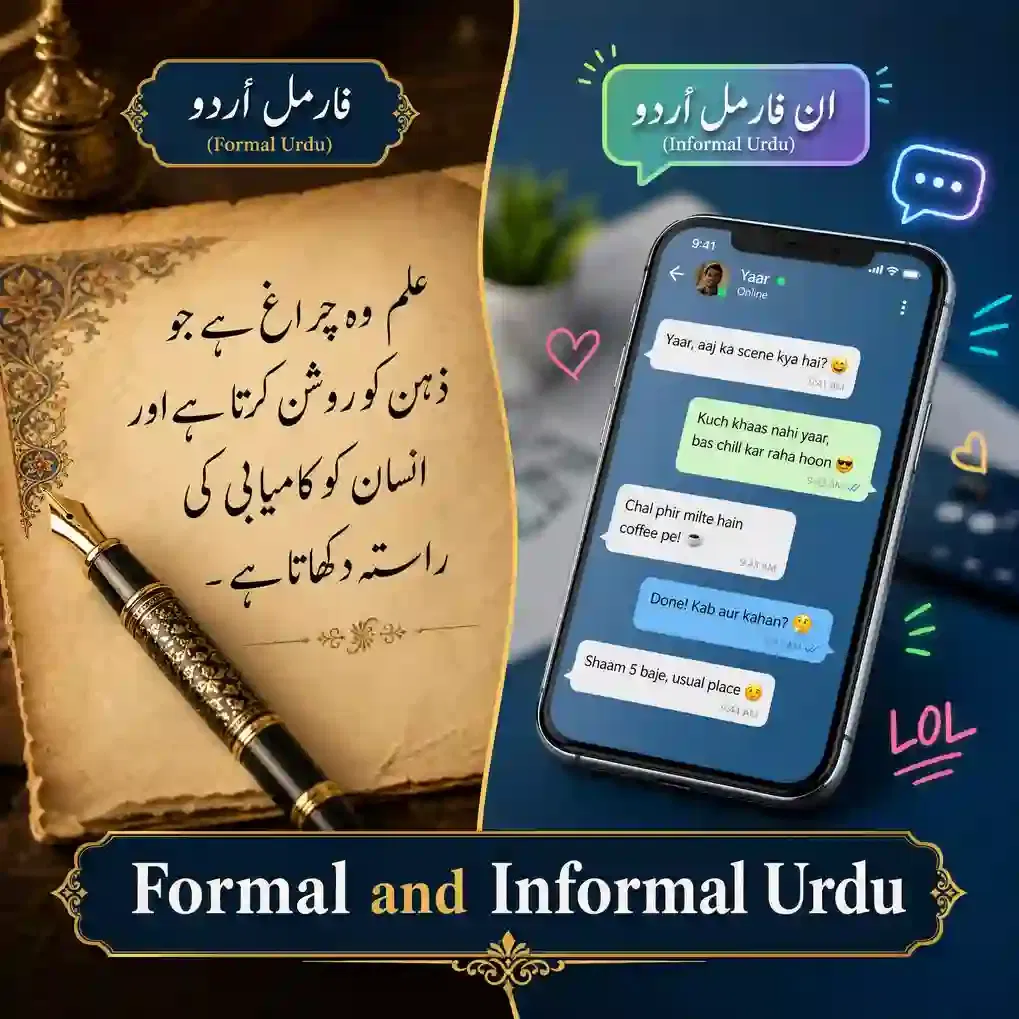
These dialogues show how Formal and Informal Urdu changes with the situation. Formal conversations use respectful pronouns like آپ (Aap) and polite expressions. Informal conversations use relaxed language with تم (Tum) or familiar wording. Practicing both styles will help you communicate naturally in everyday life, education, business, and professional environments.
Frequently Asked Questions
What is Formal and Informal Urdu?
Formal Urdu is the respectful style of the Urdu language. People use it in schools, offices, government departments, business meetings, and official communication. It uses polite vocabulary, honorific pronouns, and proper grammar.
What is Informal Urdu?
Informal Urdu is the casual style used in everyday conversations. Friends, family members, classmates, and close relatives commonly use it. It sounds relaxed and natural.
What is the difference between Formal and Informal Urdu?
Formal Urdu uses respectful words, polite expressions, and آپ (Aap). Informal Urdu uses everyday vocabulary and often includes تم (Tum) or تو (Tu). The choice depends on the situation and your relationship with the listener.
How do I speak Formal Urdu?
Use respectful pronouns, complete sentences, and polite expressions. Avoid slang and casual abbreviations. Listen to native speakers in professional settings and practice regularly.
Can I use Informal Urdu at work?
Use Formal Urdu in meetings, interviews, emails, and customer communication. You may use Informal Urdu only with close colleagues when the workplace culture allows it.
Which Urdu pronoun is the most respectful?
آپ (Aap) is the most respectful second-person pronoun. Use it with elders, teachers, employers, customers, and strangers.
What are common Formal Urdu phrases?
Popular expressions include السلام علیکم (Assalam-o-Alaikum), براہ کرم (Bara-e-Karam), شکریہ (Shukriya), معاف کیجیے (Maaf Kijiye), and آپ سے مل کر خوشی ہوئی (Aap Se Mil Kar Khushi Hui).
Is spoken Urdu different from written Urdu?
Yes. Spoken Urdu often uses simpler words and shorter sentences. Written Urdu usually follows stricter grammar and includes more formal vocabulary, especially in academic and official writing.
Can English speakers learn Formal Urdu?
Yes. English speakers can learn Formal Urdu with regular practice. Start with greetings, honorific pronouns, common vocabulary, and everyday conversations.
How long does it take to learn Urdu registers?
Most beginners understand the basics within a few weeks of consistent practice. Fluency depends on your study routine and real-life speaking experience.
Conclusion
Learning Formal and Informal Urdu is an important step toward speaking the language with confidence. Both styles serve different purposes. Formal Urdu helps you communicate professionally in schools, universities, workplaces, and government offices. Informal Urdu makes daily conversations with family and friends feel natural and comfortable.
The key to success is choosing the right language register for each situation. Using respectful words with elders, teachers, employers, and strangers shows good manners and cultural awareness. Speaking casually with close friends and family creates stronger personal connections. Native Urdu speakers switch between these styles every day. With regular practice, you can do the same.
Do not try to memorize every word at once. Learn a few new expressions each day. Practice complete sentences instead of isolated vocabulary. Read Urdu articles, listen to native speakers, and use real conversations whenever possible. Small daily improvements lead to lasting fluency.
To continue your Urdu learning journey, explore our other guides on Urdu Pronouns with English Meanings, Urdu Tenses Explained in English, Urdu Sentence Structure Compared with English, Urdu Greetings with English Meanings, 100 Daily Use Urdu Sentences in English, Urdu Questions and Answers in English, and 500 Common Roman Urdu Words with English Meanings. These resources will strengthen your grammar, vocabulary, pronunciation, and communication skills while helping you speak Urdu naturally in every situation.