
How to Write Roman Urdu Correctly: A Simple Guide
Have you ever found yourself stuck while texting a friend, wondering if you should spell “khushi” with one ‘h’ or two? Or perhaps you’ve seen someone write “salaam” as “slm” and felt the meaning got lost in translation?

How to Write Roman Urdu Correctly—the art of using the English alphabet to express Urdu words—has become the unofficial language of the internet in South Asia. From WhatsApp chats to viral social media captions, it is everywhere. However, because there is no “official” dictionary for it, most people write it based on how they feel, leading to confusion and misinterpretation.
If you want to know how to write Roman Urdu correctly, rank your content higher on search engines, or simply sound more professional in your digital conversations, this guide is for you.
Key Benefits of Standardized How to Write Roman Urdu Correctly:
| Benefit | Description |
| Clarity | Prevents confusion between similar-sounding words (e.g., kutta vs. kuta). |
| SEO Ranking | Helps search engines index your Urdu transliteration correctly. |
| Professionalism | Makes your brand or personal profile look polished and educated. |
| Accessibility | Easier for non-native speakers or diaspora kids to learn the language. |
Master the Vowel System
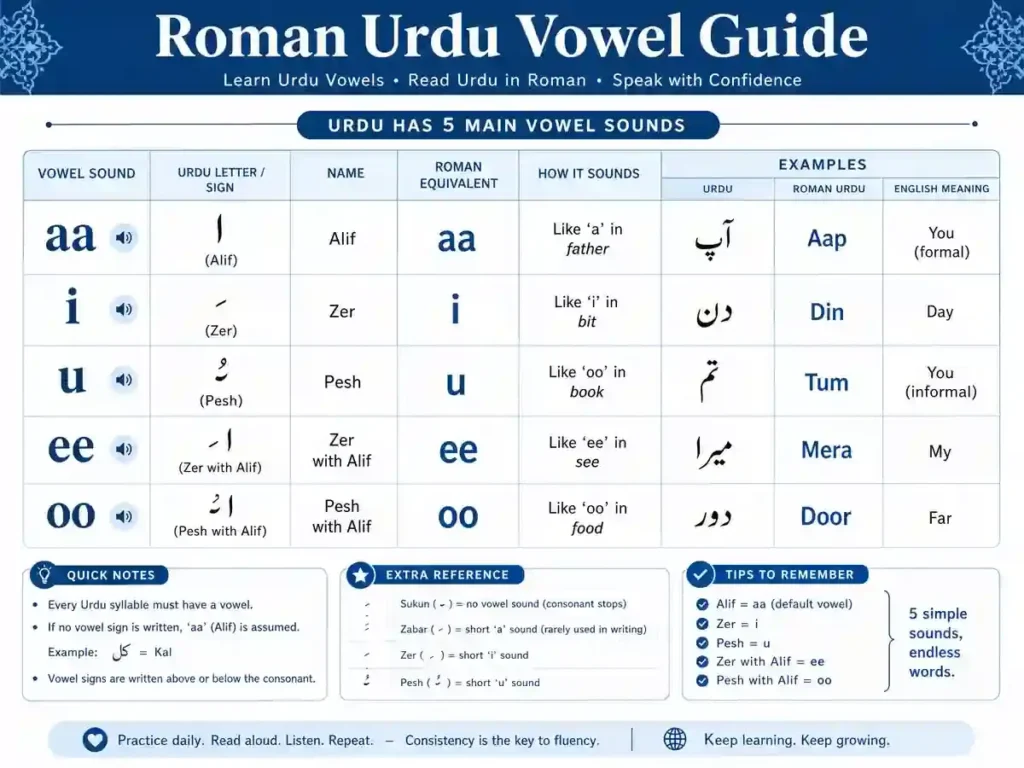
The biggest mistake people make in Roman Urdu spelling is ignoring vowel length. In Urdu, a short “a” sounds very different from a long “aa”.
- Short ‘a’: Used for the Zabar sound. (Example: Ghar – House)
- Long ‘aa’: Used for the Alif sound. (Example: Aap – You)
- ‘i’ vs ‘ee’: Use ‘i’ for short sounds (Din – Day) and ‘ee’ for long sounds (Neend – Sleep).
- ‘u’ vs ‘oo’: Use ‘u’ for short (Tum – You) and ‘oo’ for long (Bhoot – Ghost).
Navigating the Tricky Consonants
Urdu has sounds that don’t exist in English. To How to Write Roman Urdu Correctly alphabets accurately, you need to use specific combinations:
- Kh (خ): As in Khuda (God). Don’t just use ‘K’.
- Gh (غ): As in Ghalat (Wrong).
- Zh (ژ): As in Zhaala-baari (Hailstorm).
- Th (تھ / ٹھ): Be careful here. Thora (A little) uses a soft ‘th’, while Thokar (Stumble) uses a hard ‘th’. Usually, context helps, but adding an extra ‘h’ for aspirated sounds is a good rule of thumb.
Common Roman Urdu Mistakes to Avoid
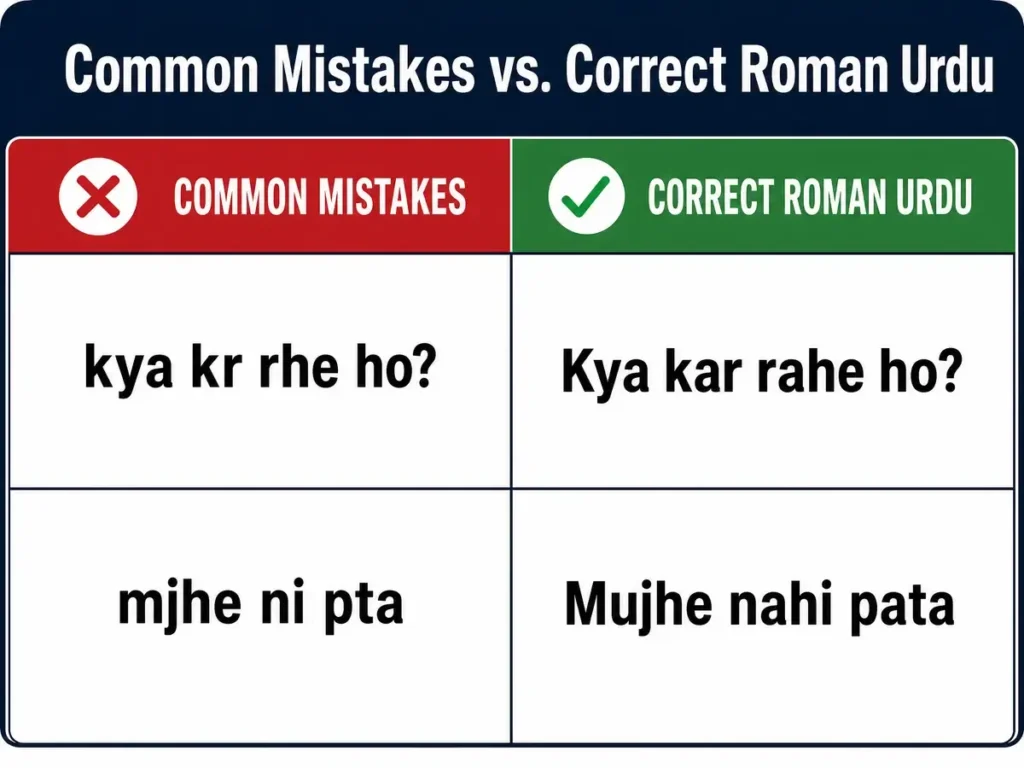
- Over-shortening: Writing “n” instead of “nahi” or “k” instead of “kya”. While fine for friends, it kills your SEO.
- Confusing ‘Z’ sounds: Urdu has several letters for ‘Z’ (ز, ذ, ض, ظ). In Roman Urdu, we usually use ‘Z’ for all, but try to keep the spelling consistent for the same word.
- Ignoring the ‘H’: The letter ‘H’ (ہ / ح) is vital. Writing “Allah” as “Alla” is technically incorrect and changes the visual weight of the word.
Recommended Tools for Roman Urdu Typing
If you struggle with manual spelling, these tools can help:
- Google Input Tools: Great for English to How to Write Roman Urdu Correctly typing.
- Easy Urdu Keyboard: A popular mobile app for quick transliteration.
- Lexilogos: Useful for looking up specific character mappings.
Conclusion
Learning how to write Roman Urdu to english correctly isn’t just about following rules; it’s about respecting the beauty of the Urdu language while adapting to the digital age. By staying consistent with your vowels, using proper consonant pairs, and avoiding lazy shortcuts, you can create content that is both humanized and search-engine friendly.
Frequently Asked Questions (FAQs)
Q1: Is there an official dictionary for Roman Urdu?
No, there is no official governing body for How to Write Roman Urdu Correctly but most linguists recommend a phonetic approach based on the Latin script. Get info about urdu travel phrases in english.
Q2: How do I write ‘ٹ’ (Hard T) in Roman Urdu?
Usually, a simple ‘t’ is used, but in academic settings, some use ‘T’ (capitalized) or ‘tt’ to distinguish it from the soft ‘ت’.
Q4: Can I use AI to write Roman Urdu?
Yes, but AI often struggles with regional dialects. Always proofread to ensure the content feels humanized and easy to read.