100 Everyday Urdu Questions and Answers in English
Learning Urdu Questions and Answers in English is one of the fastest ways to improve your everyday communication. Instead of memorising isolated words, you learn how real questions are formed, what they mean and how Urdu speakers naturally respond.
This guide includes 100 practical questions covering introductions, family, education, work, travel, shopping, food, health and daily conversation. Every example contains the original Urdu script, an easy Roman Urdu transliteration, a natural English translation and a suitable answer.
Whether you are learning Urdu for travel, speaking with family, understanding Pakistani culture or improving your translation skills, these examples will help you communicate more confidently.
Quick Example of an Urdu Question and Answer
Here is a simple example:
Urdu question: آپ کا نام کیا ہے؟
Roman Urdu: Aap ka naam kya hai?
English meaning: What is your name?
Urdu answer: میرا نام علی ہے۔
Roman Urdu: Mera naam Ali hai.
English meaning: My name is Ali.
This format helps you understand the Urdu script, pronunciation, English meaning and correct response at the same time.
Common Urdu Question Words With English Meanings
Before learning complete sentences, it is useful to understand the most common Urdu question words.
| Urdu word | Roman Urdu | English meaning | Example |
|---|---|---|---|
| کیا | Kya | What / used for yes-or-no questions | کیا آپ تیار ہیں؟ |
| کون | Kaun | Who | وہ کون ہے؟ |
| کہاں | Kahan | Where | آپ کہاں رہتے ہیں؟ |
| کب | Kab | When | آپ کب آئیں گے؟ |
| کیوں | Kyun | Why | آپ دیر سے کیوں آئے؟ |
| کیسے | Kaise | How | آپ کیسے ہیں؟ |
| کتنا | Kitna | How much / how many | یہ کتنا ہے؟ |
| کتنی | Kitni | How much / how many, feminine | کتنی دیر لگے گی؟ |
| کون سا | Kaun sa | Which, masculine | کون سا راستہ درست ہے؟ |
| کون سی | Kaun si | Which, feminine | کون سی کتاب اچھی ہے؟ |
| کس کا | Kis ka | Whose, masculine | یہ کس کا فون ہے؟ |
| کس کی | Kis ki | Whose, feminine | یہ کس کی کتاب ہے؟ |
In Urdu, a question word usually replaces the information the speaker wants to discover. Yes-or-no questions can also begin with کیا — kya, although conversational Urdu sometimes relies on tone instead.
Formal and Informal Urdu Questions
Urdu changes according to the relationship between speakers.
Use آپ — aap when speaking to:
- Elders
- Teachers
- Customers
- Managers
- Strangers
- People you want to address respectfully
Use تم — tum when speaking to:
- Close friends
- Siblings
- Younger people
- People with whom you have an informal relationship
For example:
Formal: آپ کہاں جا رہے ہیں؟
Aap kahan ja rahe hain?
Where are you going?
Informal: تم کہاں جا رہے ہو؟
Tum kahan ja rahe ho?
Where are you going?
Urdu expresses respect through pronouns, verb agreement and honorific forms. The distinction between aap, tum and the highly informal tu can significantly change the tone of a sentence.
Basic Urdu Questions and Answers in English
These introductory questions are useful when meeting someone for the first time.
| Urdu question | Roman Urdu | English question | Example answer |
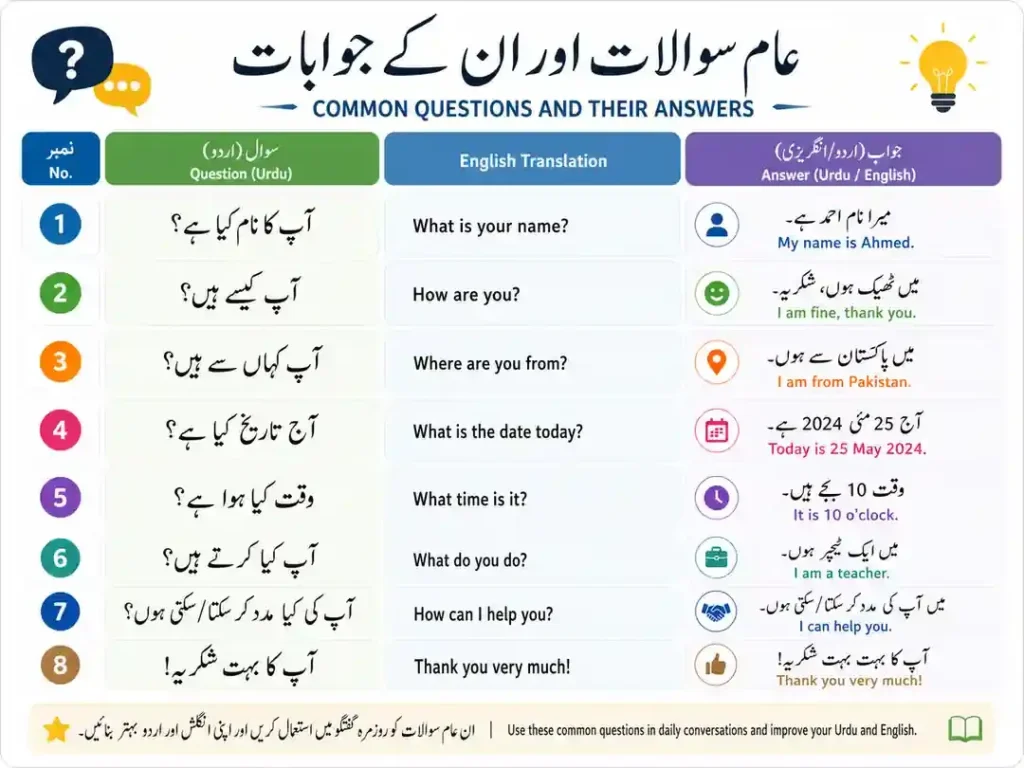
| آپ کیسے ہیں؟ | Aap kaise hain? | How are you? | میں ٹھیک ہوں، شکریہ۔ — I am fine, thank you. |
| آپ کا نام کیا ہے؟ | Aap ka naam kya hai? | What is your name? | میرا نام احمد ہے۔ — My name is Ahmed. |
| آپ کہاں سے ہیں؟ | Aap kahan se hain? | Where are you from? | میں پاکستان سے ہوں۔ — I am from Pakistan. |
| کیا آپ اردو بولتے ہیں؟ | Kya aap Urdu bolte hain? | Do you speak Urdu? | جی ہاں، میں اردو بولتا ہوں۔ — Yes, I speak Urdu. |
| کیا آپ انگریزی سمجھتے ہیں؟ | Kya aap Angrezi samajhte hain? | Do you understand English? | جی ہاں، تھوڑی سی۔ — Yes, a little. |
| کیا سب خیریت ہے؟ | Kya sab khairiyat hai? | Is everything alright? | جی ہاں، سب ٹھیک ہے۔ — Yes, everything is fine. |
| آپ کی عمر کیا ہے؟ | Aap ki umar kya hai? | How old are you? | میری عمر پچیس سال ہے۔ — I am twenty-five years old. |
| آپ کہاں رہتے ہیں؟ | Aap kahan rehte hain? | Where do you live? | میں لاہور میں رہتا ہوں۔ — I live in Lahore. |
| آپ کیا کرتے ہیں؟ | Aap kya karte hain? | What do you do? | میں ایک استاد ہوں۔ — I am a teacher. |
| کیا ہم پہلے مل چکے ہیں؟ | Kya hum pehle mil chuke hain? | Have we met before? | میرا خیال ہے کہ نہیں۔ — I do not think so. |
Urdu Questions About Family and Personal Life
These questions are commonly used when getting to know someone. Some may feel personal, so they should be asked only when appropriate.
| Urdu question | Roman Urdu | English question | Example answer |
| آپ کے خاندان میں کتنے لوگ ہیں؟ | Aap ke khandan mein kitne log hain? | How many people are in your family? | ہمارے خاندان میں پانچ لوگ ہیں۔ — There are five people in our family. |
| کیا آپ شادی شدہ ہیں؟ | Kya aap shadi shuda hain? | Are you married? | جی ہاں، میں شادی شدہ ہوں۔ — Yes, I am married. |
| آپ کے کتنے بہن بھائی ہیں؟ | Aap ke kitne behen bhai hain? | How many siblings do you have? | میرے دو بھائی اور ایک بہن ہے۔ — I have two brothers and one sister. |
| آپ کے والد کیا کرتے ہیں؟ | Aap ke walid kya karte hain? | What does your father do? | میرے والد کاروبار کرتے ہیں۔ — My father runs a business. |
| آپ کی والدہ کیسی ہیں؟ | Aap ki walida kaisi hain? | How is your mother? | وہ بالکل ٹھیک ہیں۔ — She is perfectly fine. |
| کیا آپ کے بچے ہیں؟ | Kya aap ke bachay hain? | Do you have children? | جی ہاں، میرے دو بچے ہیں۔ — Yes, I have two children. |
| آپ کی سالگرہ کب ہے؟ | Aap ki salgirah kab hai? | When is your birthday? | میری سالگرہ دس مئی کو ہے۔ — My birthday is on 10 May. |
| آپ کا پسندیدہ رنگ کون سا ہے؟ | Aap ka pasandeeda rang kaun sa hai? | What is your favourite colour? | میرا پسندیدہ رنگ نیلا ہے۔ — My favourite colour is blue. |
| آپ کا شوق کیا ہے؟ | Aap ka shauq kya hai? | What is your hobby? | مجھے کتابیں پڑھنے کا شوق ہے۔ — I enjoy reading books. |
| آپ فارغ وقت میں کیا کرتے ہیں؟ | Aap farigh waqt mein kya karte hain? | What do you do in your free time? | میں موسیقی سنتا ہوں۔ — I listen to music. |
Daily Routine Questions in Urdu
These phrases are helpful when discussing routines, habits and everyday activities.
| Urdu question | Roman Urdu | English question | Example answer |
| آپ کتنے بجے اٹھتے ہیں؟ | Aap kitne bajay uthte hain? | What time do you wake up? | میں سات بجے اٹھتا ہوں۔ — I wake up at seven. |
| آپ ناشتے میں کیا کھاتے ہیں؟ | Aap nashtay mein kya khate hain? | What do you eat for breakfast? | میں انڈا اور روٹی کھاتا ہوں۔ — I eat an egg and bread. |
| آپ دفتر کیسے جاتے ہیں؟ | Aap daftar kaise jate hain? | How do you go to the office? | میں بس سے جاتا ہوں۔ — I go by bus. |
| آپ گھر کب واپس آتے ہیں؟ | Aap ghar kab wapas aate hain? | When do you return home? | میں شام چھ بجے واپس آتا ہوں۔ — I return at six in the evening. |
| کیا آپ روز ورزش کرتے ہیں؟ | Kya aap roz warzish karte hain? | Do you exercise every day? | جی ہاں، میں روز چلتا ہوں۔ — Yes, I walk every day. |
| آج موسم کیسا ہے؟ | Aaj mausam kaisa hai? | How is the weather today? | آج موسم خوشگوار ہے۔ — The weather is pleasant today. |
| آپ ابھی کیا کر رہے ہیں؟ | Aap abhi kya kar rahe hain? | What are you doing now? | میں کام کر رہا ہوں۔ — I am working. |
| کیا آپ مصروف ہیں؟ | Kya aap masroof hain? | Are you busy? | نہیں، میں ابھی فارغ ہوں۔ — No, I am free right now. |
| کیا آپ میری مدد کر سکتے ہیں؟ | Kya aap meri madad kar sakte hain? | Can you help me? | جی ہاں، ضرور۔ — Yes, of course. |
| آپ کو کون سی فلمیں پسند ہیں؟ | Aap ko kaun si filmein pasand hain? | What kind of films do you like? | مجھے مزاحیہ فلمیں پسند ہیں۔ — I like comedy films. |
Urdu Questions and Answers for Students
Students can use these expressions in classrooms, language lessons and study groups.
| Urdu question | Roman Urdu | English question | Example answer |
| آپ کس جماعت میں ہیں؟ | Aap kis jamaat mein hain? | What class are you in? | میں دسویں جماعت میں ہوں۔ — I am in the tenth class. |
| آپ کا پسندیدہ مضمون کون سا ہے؟ | Aap ka pasandeeda mazmoon kaun sa hai? | What is your favourite subject? | میرا پسندیدہ مضمون انگریزی ہے۔ — English is my favourite subject. |
| کلاس کب شروع ہوتی ہے؟ | Class kab shuru hoti hai? | When does the class start? | کلاس نو بجے شروع ہوتی ہے۔ — The class starts at nine. |
| کیا آپ نے ہوم ورک مکمل کر لیا؟ | Kya aap ne homework mukammal kar liya? | Have you completed the homework? | جی ہاں، میں نے مکمل کر لیا ہے۔ — Yes, I have completed it. |
| یہ لفظ کیسے پڑھتے ہیں؟ | Yeh lafz kaise parhte hain? | How do you pronounce this word? | اسے اس طرح پڑھتے ہیں۔ — It is pronounced like this. |
| اس کا انگریزی میں کیا مطلب ہے؟ | Is ka Angrezi mein kya matlab hai? | What does this mean in English? | اس کا مطلب “welcome” ہے۔ — It means “welcome.” |
| کیا آپ سوال سمجھ گئے؟ | Kya aap sawal samajh gaye? | Did you understand the question? | جی ہاں، میں سمجھ گیا۔ — Yes, I understood it. |
| امتحان کب ہے؟ | Imtihan kab hai? | When is the examination? | امتحان اگلے ہفتے ہے۔ — The examination is next week. |
| آپ نے یہ جواب کیسے حاصل کیا؟ | Aap ne yeh jawab kaise hasil kiya? | How did you get this answer? | میں نے فارمولا استعمال کیا۔ — I used the formula. |
| کیا میں ایک سوال پوچھ سکتا ہوں؟ | Kya main aik sawal pooch sakta hoon? | May I ask a question? | جی ہاں، ضرور پوچھیں۔ — Yes, please ask. |
A female speaker would say پوچھ سکتی ہوں — pooch sakti hoon instead of پوچھ سکتا ہوں — pooch sakta hoon.
Professional Urdu Questions for Work
These questions are suitable for offices, meetings, customer service and professional conversations.
| Urdu question | Roman Urdu | English question | Example answer |
| آپ کہاں کام کرتے ہیں؟ | Aap kahan kaam karte hain? | Where do you work? | میں ایک سافٹ ویئر کمپنی میں کام کرتا ہوں۔ — I work at a software company. |
| آپ کا عہدہ کیا ہے؟ | Aap ka ohda kya hai? | What is your position? | میں مارکیٹنگ مینیجر ہوں۔ — I am a marketing manager. |
| میٹنگ کب شروع ہوگی؟ | Meeting kab shuru hogi? | When will the meeting start? | میٹنگ گیارہ بجے شروع ہوگی۔ — The meeting will start at eleven. |
| کیا آپ آج دستیاب ہیں؟ | Kya aap aaj dastiyab hain? | Are you available today? | جی ہاں، میں دوپہر کے بعد دستیاب ہوں۔ — Yes, I am available after noon. |
| کیا آپ مجھے ای میل بھیج سکتے ہیں؟ | Kya aap mujhe email bhej sakte hain? | Can you send me an email? | جی ہاں، میں ابھی بھیج دیتا ہوں۔ — Yes, I will send it now. |
| اس کام کی آخری تاریخ کیا ہے؟ | Is kaam ki aakhri tareekh kya hai? | What is the deadline for this task? | آخری تاریخ جمعہ ہے۔ — The deadline is Friday. |
| کیا رپورٹ تیار ہے؟ | Kya report tayyar hai? | Is the report ready? | جی ہاں، رپورٹ مکمل ہے۔ — Yes, the report is complete. |
| ہمیں کس سے رابطہ کرنا چاہیے؟ | Hamein kis se rabta karna chahiye? | Whom should we contact? | آپ اکاؤنٹس ڈیپارٹمنٹ سے رابطہ کریں۔ — Contact the accounts department. |
| اس منصوبے کا مقصد کیا ہے؟ | Is mansoobay ka maqsad kya hai? | What is the purpose of this project? | اس کا مقصد فروخت بڑھانا ہے۔ — Its purpose is to increase sales. |
| کیا آپ اس کی وضاحت کر سکتے ہیں؟ | Kya aap is ki wazahat kar sakte hain? | Can you explain this? | جی ہاں، میں تفصیل سے سمجھاتا ہوں۔ — Yes, I will explain it in detail. |
Travel and Direction Questions in Urdu
These practical questions can help travellers use public transport, ask for directions and find accommodation.
| Urdu question | Roman Urdu | English question | Example answer |
| ریلوے اسٹیشن کہاں ہے؟ | Railway station kahan hai? | Where is the railway station? | اسٹیشن سیدھا آگے ہے۔ — The station is straight ahead. |
| ہوائی اڈہ کتنی دور ہے؟ | Hawai adda kitni door hai? | How far is the airport? | ہوائی اڈہ یہاں سے دس کلومیٹر دور ہے۔ — The airport is ten kilometres from here. |
| یہاں سے بس کب روانہ ہوگی؟ | Yahan se bus kab rawana hogi? | When will the bus leave? | بس پانچ بجے روانہ ہوگی۔ — The bus will leave at five. |
| یہ ٹکٹ کتنے کا ہے؟ | Yeh ticket kitne ka hai? | How much is this ticket? | یہ ٹکٹ پانچ سو روپے کا ہے۔ — This ticket costs five hundred rupees. |
| کیا یہ سیٹ خالی ہے؟ | Kya yeh seat khali hai? | Is this seat available? | جی ہاں، آپ بیٹھ سکتے ہیں۔ — Yes, you may sit here. |
| مجھے اس پتے پر کیسے جانا ہے؟ | Mujhe is patay par kaise jana hai? | How can I get to this address? | اگلی سڑک سے دائیں مڑیں۔ — Turn right at the next road. |
| کیا آپ نقشے پر دکھا سکتے ہیں؟ | Kya aap naqshay par dikha sakte hain? | Can you show me on the map? | جی ہاں، یہ جگہ یہاں ہے۔ — Yes, the place is here. |
| سفر میں کتنا وقت لگے گا؟ | Safar mein kitna waqt lagega? | How long will the journey take? | تقریباً ایک گھنٹہ لگے گا۔ — It will take about one hour. |
| کیا ٹرین وقت پر ہے؟ | Kya train waqt par hai? | Is the train on time? | نہیں، ٹرین کچھ دیر سے ہے۔ — No, the train is slightly delayed. |
| کیا یہاں کوئی ہوٹل قریب ہے؟ | Kya yahan koi hotel qareeb hai? | Is there a hotel nearby? | جی ہاں، سامنے ایک ہوٹل ہے۔ — Yes, there is a hotel opposite. |
Shopping Questions and Answers in Urdu
These expressions can be used in markets, shopping centres and online purchasing conversations.
| Urdu question | Roman Urdu | English question | Example answer |
| یہ کتنے کا ہے؟ | Yeh kitne ka hai? | How much is this? | یہ ایک ہزار روپے کا ہے۔ — It costs one thousand rupees. |
| کیا اس پر رعایت ہے؟ | Kya is par riayat hai? | Is there a discount on this? | جی ہاں، اس پر دس فیصد رعایت ہے۔ — Yes, it has a ten percent discount. |
| کیا آپ کے پاس بڑا سائز ہے؟ | Kya aap ke paas bara size hai? | Do you have a larger size? | جی ہاں، میں ابھی لاتا ہوں۔ — Yes, I will bring it. |
| کیا میں اسے پہن کر دیکھ سکتا ہوں؟ | Kya main isay pehen kar dekh sakta hoon? | Can I try it on? | جی ہاں، تبدیل کرنے کا کمرہ وہاں ہے۔ — Yes, the changing room is over there. |
| کیا آپ کارڈ قبول کرتے ہیں؟ | Kya aap card qabool karte hain? | Do you accept cards? | جی ہاں، ہم کارڈ قبول کرتے ہیں۔ — Yes, we accept cards. |
| کیا مجھے رسید مل سکتی ہے؟ | Kya mujhe raseed mil sakti hai? | Can I get a receipt? | جی ہاں، یہ آپ کی رسید ہے۔ — Yes, here is your receipt. |
| یہ کہاں بنا ہے؟ | Yeh kahan bana hai? | Where was this made? | یہ پاکستان میں بنا ہے۔ — It was made in Pakistan. |
| کیا اس کی ضمانت ہے؟ | Kya is ki zamanat hai? | Does it have a warranty? | جی ہاں، اس کی ایک سال کی ضمانت ہے۔ — Yes, it has a one-year warranty. |
| کیا آپ قیمت کم کر سکتے ہیں؟ | Kya aap qeemat kam kar sakte hain? | Can you lower the price? | معاف کیجیے، قیمت مقرر ہے۔ — Sorry, the price is fixed. |
| واپسی کی پالیسی کیا ہے؟ | Wapsi ki policy kya hai? | What is the return policy? | آپ سات دن کے اندر واپس کر سکتے ہیں۔ — You may return it within seven days. |
Restaurant and Food Questions in Urdu
Food-related questions are among the most useful Urdu expressions for travellers and new learners.
| Urdu question | Roman Urdu | English question | Example answer |
| آپ کیا کھانا پسند کریں گے؟ | Aap kya khana pasand karenge? | What would you like to eat? | میں بریانی لینا پسند کروں گا۔ — I would like to have biryani. |
| کیا یہ کھانا تیز مرچ والا ہے؟ | Kya yeh khana tez mirch wala hai? | Is this food spicy? | جی ہاں، یہ تھوڑا تیز ہے۔ — Yes, it is slightly spicy. |
| کیا آپ کے پاس سبزی والا کھانا ہے؟ | Kya aap ke paas sabzi wala khana hai? | Do you have vegetarian food? | جی ہاں، ہمارے پاس دال اور سبزی ہے۔ — Yes, we have lentils and vegetables. |
| کیا مجھے پانی مل سکتا ہے؟ | Kya mujhe pani mil sakta hai? | Can I have some water? | جی ہاں، ابھی لاتا ہوں۔ — Yes, I will bring it now. |
| آرڈر آنے میں کتنا وقت لگے گا؟ | Order aane mein kitna waqt lagega? | How long will the order take? | تقریباً پندرہ منٹ لگیں گے۔ — It will take about fifteen minutes. |
| اس ڈش میں کیا ہے؟ | Is dish mein kya hai? | What is in this dish? | اس میں چاول، گوشت اور مصالحے ہیں۔ — It contains rice, meat and spices. |
| کیا میں بل لے سکتا ہوں؟ | Kya main bill le sakta hoon? | Can I have the bill? | جی ہاں، میں ابھی بل لاتا ہوں۔ — Yes, I will bring the bill now. |
| کیا ناشتہ شامل ہے؟ | Kya nashta shamil hai? | Is breakfast included? | جی ہاں، ناشتہ قیمت میں شامل ہے۔ — Yes, breakfast is included in the price. |
| آپ کی خاص ڈش کون سی ہے؟ | Aap ki khaas dish kaun si hai? | What is your speciality? | ہماری خاص ڈش چکن کڑاہی ہے۔ — Our speciality is chicken karahi. |
| کیا یہ حلال ہے؟ | Kya yeh halal hai? | Is this halal? | جی ہاں، یہ حلال ہے۔ — Yes, it is halal. |
Health and Medical Questions in Urdu
The following phrases may help in basic medical situations. Serious symptoms should always be discussed with a qualified healthcare professional.
| Urdu question | Roman Urdu | English question | Example answer |
| آپ کی طبیعت کیسی ہے؟ | Aap ki tabiyat kaisi hai? | How are you feeling? | میری طبیعت کچھ خراب ہے۔ — I am not feeling very well. |
| آپ کو کہاں درد ہے؟ | Aap ko kahan dard hai? | Where does it hurt? | میرے سر میں درد ہے۔ — I have a headache. |
| کیا آپ کو بخار ہے؟ | Kya aap ko bukhar hai? | Do you have a fever? | جی ہاں، مجھے ہلکا بخار ہے۔ — Yes, I have a mild fever. |
| یہ مسئلہ کب شروع ہوا؟ | Yeh masla kab shuru hua? | When did this problem start? | یہ کل شروع ہوا۔ — It started yesterday. |
| کیا آپ کوئی دوا لے رہے ہیں؟ | Kya aap koi dawa le rahe hain? | Are you taking any medicine? | جی ہاں، میں ڈاکٹر کی دی ہوئی دوا لے رہا ہوں۔ — Yes, I am taking medicine prescribed by the doctor. |
| قریب ترین ہسپتال کہاں ہے؟ | Qareeb tareen hospital kahan hai? | Where is the nearest hospital? | ہسپتال اگلی سڑک پر ہے۔ — The hospital is on the next road. |
| کیا یہاں کوئی ڈاکٹر ہے؟ | Kya yahan koi doctor hai? | Is there a doctor here? | جی ہاں، ڈاکٹر اندر موجود ہیں۔ — Yes, the doctor is inside. |
| کیا مجھے آرام کرنا چاہیے؟ | Kya mujhe aaram karna chahiye? | Should I rest? | جی ہاں، آپ کو آرام کرنا چاہیے۔ — Yes, you should rest. |
| دوا کتنی بار لینی ہے؟ | Dawa kitni baar leni hai? | How often should the medicine be taken? | اسے دن میں دو بار لیں۔ — Take it twice a day. |
| کیا یہ ایمرجنسی ہے؟ | Kya yeh emergency hai? | Is this an emergency? | جی ہاں، فوراً مدد بلائیں۔ — Yes, call for help immediately. |
Phone, Internet and Emergency Questions
These questions are helpful when making calls, using the internet or asking for urgent assistance.
| Urdu question | Roman Urdu | English question | Example answer |
| آپ کہاں ہیں؟ | Aap kahan hain? | Where are you? | میں گھر پر ہوں۔ — I am at home. |
| آپ کب پہنچیں گے؟ | Aap kab pohnchenge? | When will you arrive? | میں دس منٹ میں پہنچ جاؤں گا۔ — I will arrive in ten minutes. |
| کیا آپ مجھے سن سکتے ہیں؟ | Kya aap mujhe sun sakte hain? | Can you hear me? | جی ہاں، میں آپ کو سن سکتا ہوں۔ — Yes, I can hear you. |
| کیا آپ بعد میں فون کر سکتے ہیں؟ | Kya aap baad mein phone kar sakte hain? | Can you call later? | جی ہاں، میں شام کو فون کروں گا۔ — Yes, I will call in the evening. |
| آپ کا فون نمبر کیا ہے؟ | Aap ka phone number kya hai? | What is your phone number? | میرا نمبر صفر تین سو سے شروع ہوتا ہے۔ — My number begins with 0300. |
| کیا یہاں وائی فائی ہے؟ | Kya yahan Wi-Fi hai? | Is Wi-Fi available here? | جی ہاں، مفت وائی فائی موجود ہے۔ — Yes, free Wi-Fi is available. |
| وائی فائی کا پاس ورڈ کیا ہے؟ | Wi-Fi ka password kya hai? | What is the Wi-Fi password? | پاس ورڈ استقبالیہ پر لکھا ہے۔ — The password is written at reception. |
| کیا آپ میری تصویر لے سکتے ہیں؟ | Kya aap meri tasveer le sakte hain? | Can you take my picture? | جی ہاں، ضرور۔ — Yes, of course. |
| پولیس اسٹیشن کہاں ہے؟ | Police station kahan hai? | Where is the police station? | پولیس اسٹیشن قریب ہی ہے۔ — The police station is nearby. |
| کیا آپ انگریزی میں بات کر سکتے ہیں؟ | Kya aap Angrezi mein baat kar sakte hain? | Can you speak in English? | جی ہاں، میں انگریزی میں بات کر سکتا ہوں۔ — Yes, I can speak in English. |
How to Form Your Own Urdu Questions
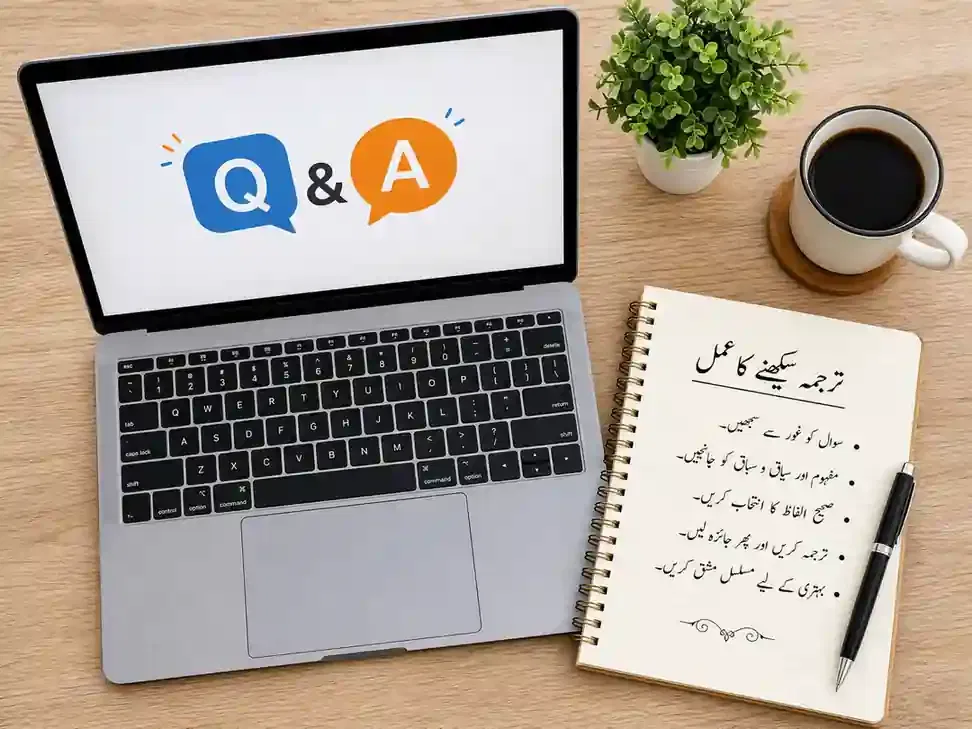
You do not need to memorise every sentence separately. Once you understand a few basic patterns, you can create many original questions. translate urdu to english pic.
Pattern 1: Question word plus sentence
Use a question word where the missing information should appear.
آپ کہاں کام کرتے ہیں؟
Aap kahan kaam karte hain?
Where do you work?
Replace کہاں — kahan with another question word:
آپ کب کام کرتے ہیں؟
Aap kab kaam karte hain?
When do you work?
Pattern 2: Kya for yes-or-no questions
Place کیا — kya at the beginning when the expected answer is yes or no.
کیا آپ تیار ہیں؟
Kya aap tayyar hain?
Are you ready?
کیا آپ کو چائے پسند ہے؟
Kya aap ko chai pasand hai?
Do you like tea?
Pattern 3: Asking about a person or thing
Use کون — kaun for people and کون سا or کون سی — kaun sa or kaun si when choosing between things.
وہ کون ہے؟
Woh kaun hai?
Who is that?
آپ کو کون سی کتاب پسند ہے؟
Aap ko kaun si kitab pasand hai?
Which book do you like?
Pattern 4: Asking about quantity
Use کتنا — kitna, کتنی — kitni or کتنے — kitne, depending on the noun and sentence.
یہ کتنا مہنگا ہے؟
Yeh kitna mehnga hai?
How expensive is this?
کتنی دیر لگے گی؟
Kitni dair lagegi?
How long will it take?
کتنے لوگ آئیں گے؟
Kitne log aayenge?
How many people will come?
Gender Differences in Urdu Answers
Some Urdu verbs and adjectives change according to the gender of the speaker or person being discussed.
A male speaker may say:
میں تھک گیا ہوں۔
Main thak gaya hoon.
I am tired.
A female speaker may say:
میں تھک گئی ہوں۔
Main thak gayi hoon.
I am tired.
Another example:
Male: میں جا رہا ہوں۔
Main ja raha hoon.
I am going.
Female: میں جا رہی ہوں۔
Main ja rahi hoon.
I am going.
English often uses the same sentence for both genders, while Urdu may change the verb ending.
Common Mistakes English Speakers Make
Translating Every Word Literally
Urdu and English do not always follow the same sentence structure.
For example:
آپ کا نام کیا ہے؟
A word-for-word translation would sound like “Your name what is?” The natural English translation is “What is your name?”
Translate the complete meaning rather than forcing every Urdu word into the same English position.
Using Tum With Elders
Using tum with an elder, teacher or unfamiliar person may sound disrespectful. Use aap unless you are certain an informal form is acceptable.
Ignoring Gender Endings
Forms such as karta/karti, gaya/gayi and raha/rahi depend on gender. Incorrect endings may still be understood, but they can make the sentence sound unnatural.
Treating Kya Only as “What”
The word kya can mean “what,” but it can also turn a statement into a yes-or-no question.
آپ کیا کھاتے ہیں؟
What do you eat?
کیا آپ کھاتے ہیں؟
Do you eat?
Its meaning depends on its position and function in the sentence.
Expecting One Fixed Roman Urdu Spelling
Roman Urdu does not have one universally fixed spelling system. For example, کیسے may appear as kaise, kaisay or kesay. Focus on pronunciation and meaning rather than expecting every writer to use identical spellings.
How to Practise Urdu Questions and Answers
Start with ten questions connected to your daily life. Read each question aloud, answer it with your own information and repeat the exchange without looking at the translation.
For example:
آپ کہاں رہتے ہیں؟
Where do you live?
Instead of memorising the sample answer, replace it with your real city:
میں کراچی میں رہتا ہوں۔
I live in Karachi.
You can also practise by:
- Recording your voice and comparing your pronunciation.
- Writing one new answer for every question.
- Changing formal aap sentences into informal tum sentences.
- Translating your answers back into English.
- Practising complete conversations instead of isolated vocabulary.
Personal answers are easier to remember because they connect the language with real information from your life.
Frequently Asked Questions
What are some common Urdu questions in English?
Common Urdu questions include Aap kaise hain? meaning “How are you?”, Aap ka naam kya hai? meaning “What is your name?” and Aap kahan rehte hain? meaning “Where do you live?” These questions are commonly used in introductions and everyday conversations.
How do you ask a question in Urdu?
Use an Urdu question word such as kya, kaun, kahan, kab, kyun or kaise. For yes-or-no questions, kya is often placed at the beginning, as in Kya aap tayyar hain?, meaning “Are you ready?”
What does “Aap kaise hain?” mean in English?
Aap kaise hain? means “How are you?” in English. It is a polite and formal question. A natural answer is Main theek hoon, shukriya, which means “I am fine, thank you.”
What is the difference between aap and tum?
Both words mean “you,” but they express different levels of formality. Aap is respectful and should be used with elders, strangers and people in professional situations. Tum is informal and is more suitable for friends, siblings and people you know well.
How do you say “What is your name?” in Urdu?
“What is your name?” is آپ کا نام کیا ہے؟ in Urdu. Its Roman Urdu form is Aap ka naam kya hai? A suitable response is Mera naam Ali hai, meaning “My name is Ali.”
How do you answer yes or no in Urdu?
“Yes” is commonly expressed as جی ہاں — ji haan or simply ہاں — haan. “No” is نہیں — nahin. Using ji haan sounds more polite and respectful than using haan alone.
Is Roman Urdu the same as Urdu?
Roman Urdu represents Urdu sounds using the Latin alphabet instead of the traditional Urdu script. For example, آپ کیسے ہیں؟ becomes Aap kaise hain? The spoken language is still Urdu, but the writing system is different.
How can beginners learn Urdu questions quickly?
Beginners should learn common question words first and then practise short, reusable sentence patterns. Speaking the questions aloud, answering with personal information and reviewing a small number every day is more effective than memorising a long list at once.
Why do Urdu words change for male and female speakers?
Urdu verbs and adjectives often agree with grammatical gender. A man may say Main ja raha hoon, while a woman says Main ja rahi hoon. Both sentences mean “I am going” in English.
Where can I translate my own Urdu questions into English?
You can use the Urdu-to-English translation tool on UrduToEnglishTranslate.com to translate Urdu script or Roman Urdu. For important, formal or sensitive content, review the translation carefully to make sure the intended tone and context are preserved.
Final Thoughts
Learning Urdu through complete questions and answers is more useful than memorising disconnected vocabulary. It teaches you how words work together, how respect is expressed and how native speakers respond in real situations.
Begin with the questions you are most likely to use. Practise them aloud, replace the sample answers with your own information and gradually build short conversations.
With regular practice, these Urdu Questions and Answers in English can help you understand spoken Urdu, communicate more naturally and translate everyday conversations with greater accuracy.