
100 Basic Urdu Phrases for Beginners

Learning Urdu becomes easier when you start with phrases you can use right away. This guide focuses on 100 basic Urdu phrases for beginners. Welcome to 100 Basic Urdu Phrases for Beginners. You will learn each phrase with Urdu script, Roman Urdu, English meaning, and an easy pronunciation guide. You will also see when to use each phrase in real conversations. This guide to 100 Basic Urdu Phrases for Beginners starts with greetings.
This guide suits complete beginners, travelers, heritage learners, and anyone speaking with Pakistani friends or family. It also helps learners who understand Urdu but struggle to speak it.
The examples focus mainly on everyday Pakistani Urdu. Spoken Urdu can differ from formal or literary Urdu. Context, region, age, and relationship can also affect word choice.
Pakistan recognizes Urdu as its national language under Article 251 of the Constitution. The National Language Promotion Department supports its promotion and use.
You will also find Roman Urdu alongside Urdu script. This helps beginners who cannot read Nastaliq yet. Roman Urdu spelling can vary, so we use clear, learner-friendly forms.
The phrases cover greetings, introductions, daily conversation, family, food, shopping, travel, and common problems. You will also learn useful ways to ask questions, clarify meaning, and keep a conversation going.
The goal is simple: learn less, speak more, and use Urdu with confidence.
For language accuracy, we will draw on established Urdu references where appropriate. The Urdu Dictionary Board provides Pakistan’s historical Urdu dictionary and a large online lexical resource.
- 20 Essential Urdu Phrases to Learn First
- Start with phrases you can use from your first Urdu conversation. These expressions cover greetings, introductions, politeness, and simple replies.
- The list below uses common spoken Urdu. It also includes phrases that work well in everyday Pakistani conversations.
| # | Urdu | Roman Urdu | English Meaning |
| 1 | السلام علیکم | Assalam-o-Alaikum | Hello / Peace be upon you |
| 2 | وعلیکم السلام | Wa Alaikum Assalam | And peace be upon you |
| 3 | آپ کیسے ہیں؟ | Aap kaise hain? | How are you? |
| 4 | میں ٹھیک ہوں۔ | Main theek hoon. | I am fine. |
| 5 | شکریہ | Shukriya | Thank you |
| 6 | بہت شکریہ | Bohat shukriya | Thank you very much |
| 7 | کوئی بات نہیں | Koi baat nahi. | You’re welcome / No problem |
| 8 | معاف کیجیے | Maaf kijiye. | Sorry / Excuse me |
| 9 | جی ہاں | Ji haan. | Yes |
| 10 | نہیں | Nahi. | No |
| 11 | آپ کا نام کیا ہے؟ | Aap ka naam kya hai? | What is your name? |
| 12 | میرا نام ___ ہے۔ | Mera naam ___ hai. | My name is ___ |
| 13 | آپ سے مل کر خوشی ہوئی۔ | Aap se mil kar khushi hui. | Nice to meet you |
| 14 | خدا حافظ | Khuda Hafiz | Goodbye |
| 15 | براہِ مہربانی | Bara-e-meherbani. | Please |
| 16 | جی | Ji. | Yes / Respectful response |
| 17 | مجھے سمجھ نہیں آیا۔ | Mujhe samajh nahi aaya. | I don’t understand. |
| 18 | دوبارہ کہیے۔ | Dobara kahiye. | Please say it again. |
| 19 | آہستہ بولیے۔ | Aahista boliye. | Please speak slowly. |
| 20 | آپ اردو بولتے ہیں؟ | Aap Urdu bolte hain? | Do you speak Urdu? |
Everyday Urdu Conversation Phrases
Everyday Urdu conversation becomes easier when you learn common phrases used in real situations. You do not need to learn long sentences at the start. Focus on simple questions, short answers, greetings, and useful responses. These phrases help you communicate at home, at work, while traveling, or when meeting new people.
This section of 100 Basic Urdu Phrases for Beginners covers everyday situations.
You can start a conversation by asking someone how they are or what they are doing. You can also ask about a place, person, time, or activity. Simple answers help you keep the conversation moving without thinking about complex grammar. When you miss a word, Urdu also has polite phrases for asking someone to repeat or explain it.
Language learners often struggle when native speakers talk quickly. Phrases such as “please speak slowly” can make these situations easier. Saying “I don’t understand” also helps you communicate honestly without feeling embarrassed.
The examples in this section show how these expressions work in natural conversations. Read each phrase several times and notice how people use it in context. Then practice the dialogues aloud. Regular practice will help you recognize common Urdu expressions and use them more naturally in everyday conversations.
Polite, Formal & Casual Urdu
Urdu changes depending on who you speak with and how much respect you want to show. Choosing the right form helps you sound polite and natural. The most important difference appears in Aap, Tum, and Tu. These words can all mean “you,” but they do not carry the same level of respect. Aap works well with elders, strangers, teachers, and people you have just met. Tum usually fits friends, siblings, and people you know well. Tu sounds very informal and can feel rude in many situations. Context and relationships decide whether it sounds friendly or disrespectful.
The next part of 100 Basic Urdu Phrases for Beginners focuses on polite expressions.
Urdu also uses words such as Ji to show respect. You can add Ji when replying to someone or addressing them politely. Formal Urdu often uses softer expressions and respectful verb forms. Casual Urdu sounds more relaxed and common among close friends. Beginners should learn these differences before using informal forms.
Small mistakes can change the tone of a sentence. Using Tu with an elder can sound disrespectful. Using very formal language with a close friend can sound unusual. The following examples explain when to use each form and how to avoid common mistakes in everyday Urdu conversations.
Urdu Phrases for Family, Friends & Relationships
Family and close relationships shape many everyday Urdu conversations. People use different phrases when speaking with parents, elders, friends, spouses, and in-laws. The words often show respect, affection, concern, or familiarity. Learning these expressions helps you understand how Urdu sounds in real family settings.
Family phrases in 100 Basic Urdu Phrases for Beginners help you connect.
When people speak with parents and elders, they usually choose respectful words and polite verb forms. Simple phrases can show care without sounding formal. Friends often use relaxed expressions, jokes, and casual questions. Close friends may also use nicknames or playful language.
Urdu has many natural phrases for partners and spouses. These phrases can express love, concern, support, and daily care. You may hear them when someone asks if their partner has eaten, reached home, or feels well. Family members also use similar caring expressions in daily life.
Conversations with in-laws often need extra respect. Using Aap and respectful expressions can help maintain a warm relationship. Words such as Ji can also add politeness to everyday replies.
The phrases in this section focus on real situations. They cover family conversations, friendly chats, marriage, in-law relationships, and everyday affection. Learning them will help you speak warmly while choosing words that fit each relationship.
Urdu Phrases for Food, Shopping & Daily Life
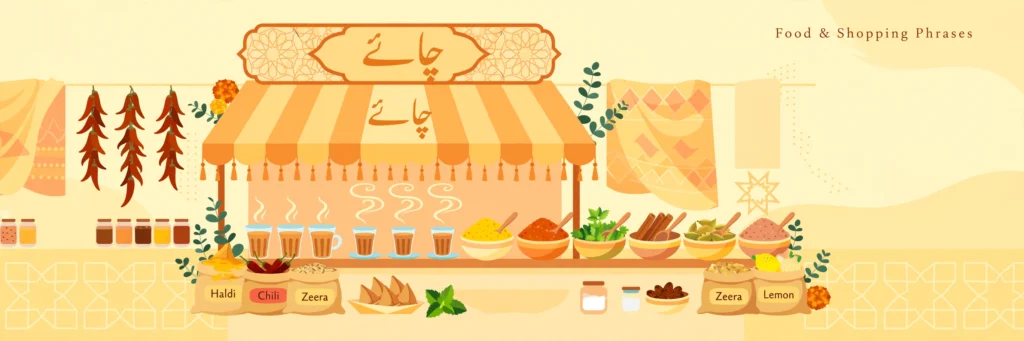
Urdu becomes more useful when you can use it in everyday situations. Food, shopping, travel, and local errands give you many chances to practice simple phrases. You may use Urdu when ordering food at a restaurant, buying groceries, asking about prices, or getting directions. These situations also help you learn common vocabulary in context.
Food and shopping phrases from 100 Basic Urdu Phrases for Beginners are practical.
Restaurants have their own useful expressions for menus, meals, drinks, and requests. Knowing words for chai, pani, roti, khana, and other common foods can make ordering easier. You can also ask about ingredients, portions, and prices when needed.
Shopping requires phrases for asking the cost, choosing an item, and discussing the final price. In some markets, buyers and sellers may bargain. Simple Urdu phrases can help you ask for a lower price without sounding rude.
Travel also brings many practical situations. You may need to ask where a street, shop, station, or building is located. Taxi and transport phrases can help you tell a driver where you want to go. You can also ask about the fare, route, and travel time.
The phrases below focus on situations you may face regularly. Each example uses simple Urdu that beginners can learn and use with confidence.
Urdu Travel, Emergency & Problem-Solving Phrases
Travel in Pakistan can bring many situations where basic Urdu makes communication easier. You may need Urdu at an airport, hotel, bus station, railway station, or taxi stand. Simple phrases can help you ask questions, understand instructions, and reach your destination.
Travel phrases in 100 Basic Urdu Phrases for Beginners solve real problems.
Travelers may also face unexpected problems. You could lose your phone or wallet, miss your transport, or struggle to find a location. Knowing a few practical Urdu expressions can help you explain the problem and ask for assistance. Clear and short sentences work best during stressful situations.
Emergency situations need extra care. You may need to ask someone to call for help or explain that you feel unwell. Urdu phrases for doctors and pharmacies can help you describe basic needs and understand simple questions. These phrases do not replace professional medical advice, but they can make communication easier.
You should also learn phrases for asking directions and finding important places. Words for hospitals, police stations, pharmacies, airports, and transport can prove useful during a trip.
The phrases in this section focus on practical travel needs. They cover hotels, transportation, emergencies, medical situations, lost belongings, and other common problems. Practice these expressions before traveling so you can respond quickly when you need them.
Urdu Pronunciation, Roman Urdu & Script
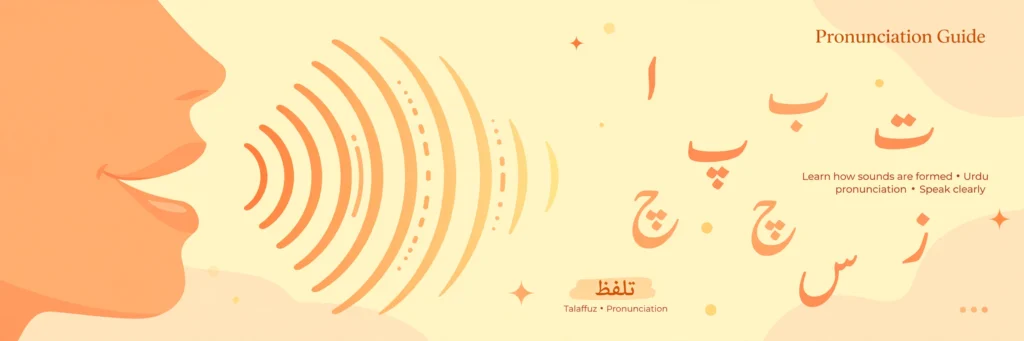
Urdu has its own script, but many learners first study the language through Roman Urdu. Understanding both forms can make learning easier. The Urdu script uses a modified Perso-Arabic writing system. It reads from right to left. Most Urdu books, newspapers, signs, and formal texts use the Urdu script.
Pronunciation tips from 100 Basic Urdu Phrases for Beginners build confidence.
Roman Urdu writes Urdu words with English letters. It helps beginners read and type Urdu without learning the script first. You may see the same word written in different ways. For example, people may write “kya,” “kia,” or “kiya.” Roman Urdu does not follow one universal spelling system.
Transliteration provides another way to represent Urdu sounds with Latin letters. Some systems use special marks for specific sounds. These systems can give learners a more consistent pronunciation guide.
Urdu also contains sounds that English speakers may find difficult. These include sounds such as خ, غ, ق, ڑ, and ٹ. A simple pronunciation guide can help learners understand these sounds. Gender can also affect some Urdu forms, especially verbs and adjectives.
Audio support can help learners hear stress, rhythm, and difficult sounds. It works best alongside written examples and repeated practice. Remember that Roman Urdu spellings can vary, so focus on the sound and meaning rather than one fixed spelling.
10 Real Urdu Conversations + Sentence Patterns
Real Urdu conversations help you turn vocabulary into useful communication. Instead of memorizing isolated phrases, study how people connect short sentences in real situations. The dialogues in this section cover common moments, from introductions and family chats to restaurants, shopping, phone calls, and asking for directions.
Practice these daily to master 100 Basic Urdu Phrases for Beginners faster.
Each conversation uses simple Urdu that beginners can understand and practice aloud. Pay attention to how speakers ask questions, give answers, request something, and respond naturally. You will also see how the same sentence structure can work in many different situations.
One useful pattern is Mujhe ___ chahiye, which means “I need/want ___.” You can replace the blank with different nouns to create new sentences. For example, Mujhe pani chahiye means “I need water,” while Mujhe madad chahiye means “I need help.”
Other patterns help you ask questions, describe what you need, or explain a problem. Learning these structures gives you more flexibility than memorizing hundreds of fixed phrases. You can change one word and create a completely new sentence.
The goal is simple: learn the pattern, understand the example, replace the key word, and say your own sentence. With regular practice, these patterns can help you build Urdu sentences with greater confidence and less hesitation.
Frequently Asked Questions

How long does it take to learn Urdu?
It depends on your goal, study time, previous language experience, and exposure. Basic phrases can come quickly with regular practice. Conversational fluency requires much longer and more consistent study.
Can I learn Urdu without learning the script?
Yes. Roman Urdu can help you start speaking and understanding common phrases. However, learning the Urdu script will make reading and writing much easier over time.
Is Roman Urdu standardized?
No. People may spell the same Urdu word in different ways using English letters. Treat Roman Urdu as a pronunciation aid rather than a fixed writing standard.
Should I learn spoken Urdu or Urdu script first?
Choose based on your goal. If conversation matters most, begin with common spoken phrases while gradually learning the script. If reading literature or written Urdu matters most, start script practice early.
What is the best way to improve Urdu pronunciation?
Listen to native speakers, repeat short phrases, and compare your speech with the original. Regular listening helps you recognize sounds and natural speech patterns.
Can Hindi speakers learn Urdu more easily?
Urdu and Hindi share substantial spoken vocabulary and are often mutually intelligible in everyday speech. The main written difference for beginners is that Urdu uses the Perso-Arabic script, while Hindi normally uses Devanagari. The University of Chicago also notes the close relationship between spoken Urdu and Hindi.
Conclusion
Learning Urdu becomes easier when you focus on useful words, natural phrases, and regular practice. You do not need to master complex grammar before you start speaking. Begin with greetings, simple questions, everyday expressions, and phrases you can use in real conversations.
Use 100 Basic Urdu Phrases for Beginners to start speaking today.
As you build your vocabulary, pay attention to context and respect. Understanding the difference between Aap, Tum, and Tu can help you speak more naturally and avoid common mistakes. Family, friends, shopping, food, travel, and emergencies also give you practical ways to use Urdu every day.
100 Basic Urdu Phrases for Beginners makes learning Urdu simple.
Pronunciation matters too. Learning Urdu script can strengthen your reading skills, while Roman Urdu can help you get started quickly. Since Roman Urdu spelling varies, focus on how words sound rather than memorizing one spelling.
The best way to learn Urdu is to use it consistently. Read short sentences, listen to native speakers, repeat phrases aloud, and practice conversations whenever possible. Even a few minutes each day can build confidence over time.
Keep practicing with 100 Basic Urdu Phrases for Beginners every day.
Whether you want to speak Urdu with family, travel through Pakistan, understand conversations, or connect with Urdu-speaking communities, these phrases give you a practical starting point. Keep practicing, stay curious, and let Urdu become part of your daily routine.
Why Roman Urdu Has No Standard Spelling